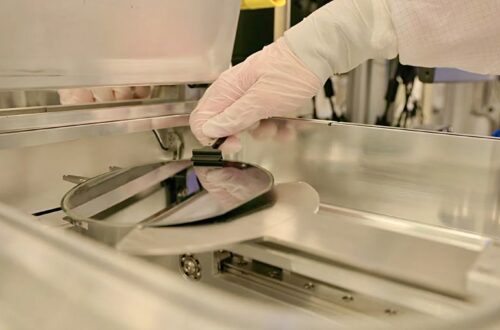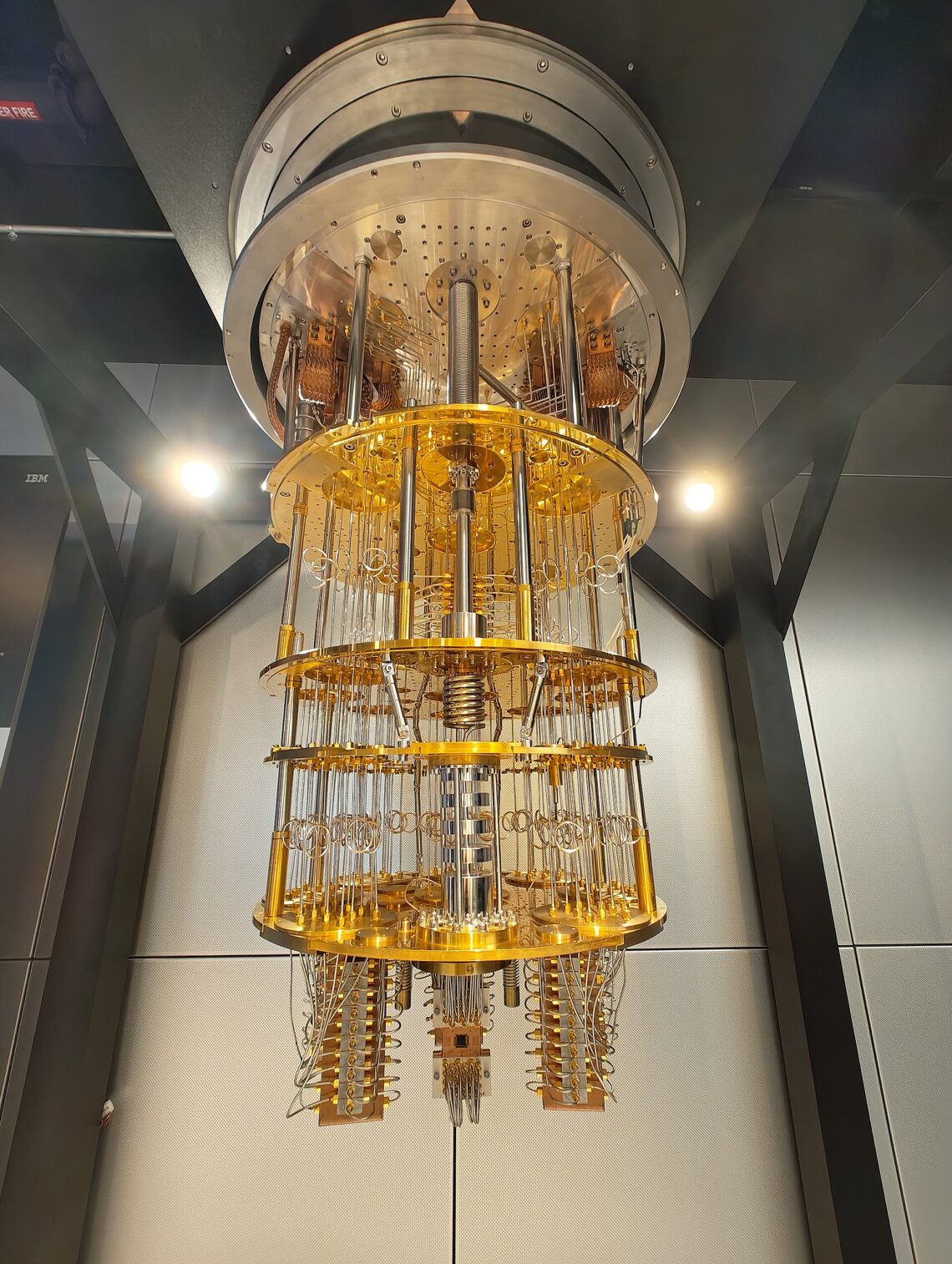
IBM Nighthawk r2 went up on IBM Quantum Platform this month, and the number the company led with was not the qubit count. The processor has 120 programmable qubits, fewer than the 156 on the Heron machines running beside it. What IBM put in the headline was throughput: more than 100,000 circuits per second, twenty-five times what Heron manages.
That is an unusual thing to advertise. The field has competed on qubit count for a decade, and press coverage still treats the number as the score. IBM spent this release arguing that the score has been measured wrong, and that the limiting factor on a machine like this one is how much useful computation it can get through in an hour.
The reason comes down to a property of quantum computing that rarely makes it into summaries. A quantum computer does not answer a question once. It answers it thousands of times and reads the distribution, and almost all of the wall-clock time goes to getting ready for the next attempt.
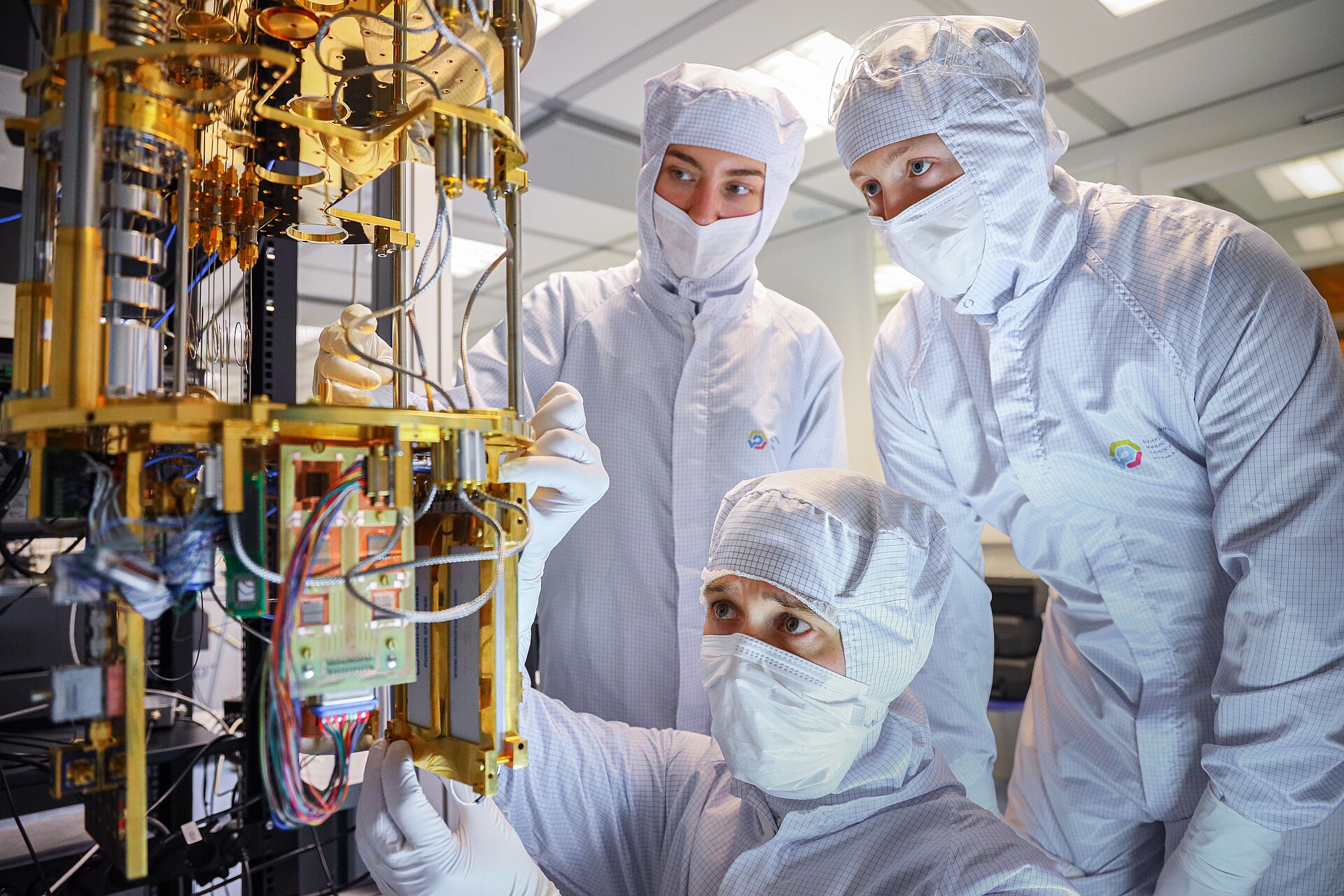
IBM Nighthawk r2, where the time actually goes
A quantum program is a circuit: a sequence of gates applied to qubits, followed by a measurement. One run produces one sample. Because the outcome is probabilistic, a useful result needs the circuit run thousands to millions of times so the statistics settle.
Every one of those runs has to start from the same place. All qubits must be in the ground state before the first gate. After a measurement they are left in whatever state the measurement produced, so something has to put them back.
Heron does this with a technique called conditional reset. The processor measures each qubit and, if it reads as excited, fires a pulse that flips it back down. The method is limited by how accurate the measurement is, and it cannot recover a qubit that has leaked into a state outside the computational pair at all.
So the system waits instead. Hundreds of microseconds of idle time between circuit executions, long enough for the qubits to decay to the ground state on their own. That waiting is why Heron tops out around 4,000 circuits per second, and why most of the time a quantum computer is booked it is not computing.
Nighthawk r2 cuts the idle period to as little as a single microsecond. That one change is where the twenty-five times comes from.

Cooling a qubit on demand instead of waiting for it
Instead of measuring a qubit and correcting it, Nighthawk r2 drains its energy. IBM calls the mechanism a dissipative reset gadget. Each programmable qubit is linked through a tunable coupler to a cold environment, and switching that coupler on opens a path for the qubit energy to leave.
The relevant number is T1, the time a qubit holds its energy before decaying. On this device the median sits at roughly 200 microseconds during normal operation. Activate the reset coupler and the effective T1 falls to about 25 nanoseconds, which is why the qubit lands in its ground state almost immediately.
Two properties make that useful rather than merely fast. The reset acts on one qubit without disturbing its neighbours, which matters on Nighthawk because its square lattice gives most qubits four nearest neighbours instead of the two or three in earlier layouts. And because the qubit is actively cooled rather than measured and patched, the starting state is cleaner: IBM reports initialization error about twenty-five times lower across the device.
Gate accuracy did not move to pay for it. IBM says Nighthawk r2 holds Heron-class two-qubit gate fidelity while running at the higher rate, which is the claim that makes the speedup worth anything.
The hardware bill for this is substantial. Behind the 120 programmable qubits sit 218 dedicated couplers and 120 independent reset elements, for 458 physical quantum elements in total. IBM notes that from a fabrication and control standpoint those extra elements are nearly indistinguishable from qubits, which makes Nighthawk r2 the most complex processor the company has put into production.
The reset also works during a circuit, not only between circuits. That detail is the one error-correction researchers care about most, and it points at the part of the roadmap this chip is really built for.
What faster circuits change, and what they do not
The early results IBM published are throughput results rather than new capabilities. In neutron-scattering simulations reported earlier this year, the higher circuit rate produced a twelvefold speedup and returned spectra comparable with laboratory data in roughly sixty seconds.
Researchers also reran the doped Clifford sampling experiments developed with the University of Chicago, the ones used to argue for quantum advantage with a built-in check that the computation ran correctly. And using probabilistic error amplification, the processor produced accurate observable estimates on circuits containing more than 7,500 gates, which IBM had set as a 2026 roadmap target.
The error-correction angle is the larger one. Correction protocols lean on auxiliary qubits that must be measured and reset over and over inside a single run. A reset that is fast, independent and neighbour-safe lets those helpers be reused instead of consumed, so Nighthawk has moved from being a platform for probing quantum advantage to being a testbed for error-corrected operation.
IBM has the rest of the path published. Kookaburra this year is meant to store information in a qLDPC memory and process it with an attached logic unit; Cockatoo in 2027 is to entangle separate modules; Starling in 2029 is targeted at 200 logical qubits running one hundred million gates, with Blue Jay beyond it at 2,000 logical qubits. The company is moving off the surface code it helped invent, arguing that qLDPC codes cut the physical qubit overhead by up to ninety percent.
Google is betting the other way. Its Willow work demonstrated below-threshold error correction on a surface code, showing that adding qubits reduced the error rate rather than raising it. Two of the best-funded programmes in the field have chosen different code families, and that disagreement will not be settled by a press release.
The limits on this announcement are worth stating. Every figure comes from IBM own measurements. Faster reset lowers initialization error but does nothing about gate error, which is the dominant term in most circuits. And 120 physical qubits remains a very long way from a fault-tolerant machine, so the applications being run are research demonstrations rather than production workloads.
What the release does change is the metric. If the honest measure of a quantum computer is useful computation per unit of time, then a chip that runs the same circuits twenty-five times over is a bigger step than one that adds thirty qubits. That reframing sits alongside a broader shift in computing hardware, where the interesting gains increasingly come from removing waiting rather than adding elements, much like the in-memory photonic chip out of Tsinghua that attacked data movement instead of raw arithmetic.
References
IBM Quantum Blog, IBM Quantum Nighthawk r2 – more circuits, faster, 31 August 2026 · Martiel et al., Sampling hard circuits with verifiably high fidelity, arXiv:2607.25941 · IBM Quantum Blog, IBM lays out clear path to fault-tolerant quantum computing · The Quantum Insider, 3 September 2026