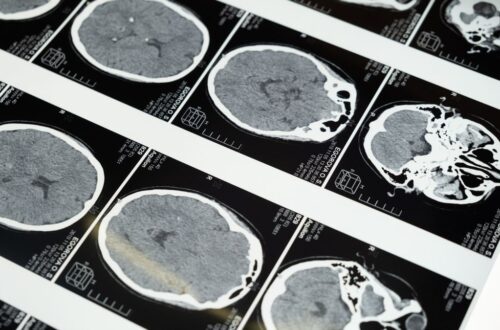
A large new study followed 95,559 adults for nearly nine years and found that REM sleep, the dream stage of the night, was linked to a lower risk of 83 different diseases, including dementia and heart failure.
REM sleep, why this 95,559-person study stands out
The data came from the UK Biobank, a long-running health database that has tracked several hundred thousand British volunteers for years. Researchers selected a group who agreed to wear wrist accelerometers.
Those 95,559 adults wore the devices continuously for seven days and nights. A deep-learning algorithm then estimated how much time each person spent in REM, deep, and light sleep, plus total duration and night-to-night irregularity.
The team linked those sleep patterns to more than 1,000 disease outcomes recorded in participants’ health records over a median follow-up of 8.9 years, published in PLOS Medicine.[1]
What the data showed for dementia, heart failure, and Parkinson’s disease
Greater REM sleep, measured per 47.6-minute IQR step, was associated with a lower risk of 83 separate diseases after the team adjusted for multiple comparisons.[1]
The strongest links appeared in neurological and cardiac conditions. More REM sleep was tied to a hazard ratio of 0.54 for dementia and 0.20 for Parkinson’s disease, meaning much lower rates in the higher-REM group.[1]
Heart failure risk was also lower, with a hazard ratio of 0.74 among people who got more REM sleep. The researchers describe this as one of the broadest single-study links reported so far between a sleep stage and long-term disease risk.

Deep sleep’s own effect: diabetes and depression risk
Deep sleep, also called slow-wave sleep, showed a narrower but still meaningful pattern. Greater deep sleep was linked to a lower risk of seven conditions, including type 2 diabetes and major depressive disorder.[1]
That is a shorter list than REM sleep’s 83 conditions, but the authors say it points to a different biological pathway. Deep sleep is tied more to physical repair and metabolic regulation, while REM sleep is linked more closely to brain and emotional processing.
REM sleep, sleep irregularity, and the cost of restless nights
The study also examined two other patterns: night-to-night irregularity and time spent awake after initially falling asleep. Both were linked to higher risk, not lower.[1]
Greater irregularity and more wakefulness after sleep onset were associated with higher risk of several conditions, including anxiety disorders and substance use disorders. Consistency and staying asleep mattered almost as much as reaching any single sleep stage.
REM sleep, the 6-to-8 hour window, and why timing may matter as much as totals
Total sleep duration did not show a simple straight-line relationship with disease risk. Instead, the lowest risk clustered in a 6-to-8 hour window for most of the more than 80 conditions studied.[1]
People who slept less than five hours a night faced the sharpest jump in risk, with an elevated chance of developing 37 different conditions. The authors call the 6-to-8 hour range a practical target rather than a rigid rule.
Practical steps for protecting REM and deep sleep
Sleep researchers generally agree that REM sleep responds to habits more than direct effort. A consistent bedtime and wake time, even on weekends, helps the body settle into its normal mix of sleep stages.[3]
Alcohol, caffeine, and tobacco late in the day all interfere with how sleep stages unfold overnight, and treating an underlying problem such as sleep apnea can restore a more typical REM pattern, an approach covered in our review of sleep apnea treatment options.
For people whose main problem is falling or staying asleep rather than sleep stages themselves, cognitive behavioral therapy has the strongest evidence base, as outlined in our earlier look at insomnia treatment trials.
What this study cannot tell us
This is an observational study, so it cannot prove that REM or deep sleep directly causes lower disease risk. People who get more REM sleep may simply differ in other health habits that the analysis could not fully capture.
The researchers also relied on a deep-learning algorithm to estimate sleep stages from wrist movement rather than an overnight sleep-lab test, which could introduce some measurement error.
UK Biobank participants also tend to be healthier than the general population, which may limit how well the findings generalize.
| Aspect | Finding |
|---|---|
| Participants | 95,559 UK Biobank adults tracked with wrist accelerometers for 7 days and nights |
| Follow-up | Median 8.9 years, linked to more than 1,000 recorded disease outcomes |
| REM sleep | Higher REM (per 47.6-min IQR) linked to lower risk of 83 diseases, incl. dementia (HR 0.54) |
| Deep sleep | Higher deep sleep linked to lower risk of 7 conditions, incl. type 2 diabetes |
| Total duration | Lowest risk concentrated in the 6-8 hour range; under 5 hours raised risk of 37 conditions |
| Irregularity | More night-to-night irregularity and wakefulness linked to higher anxiety and substance-use risk |
References
- Luo J, Liu R, Yin J, Cao W, Sun S, Chen R. Accelerometer-derived real-world sleep stages and risk of incident diseases: A UK Biobank cohort study and phenome-wide association analysis. PLOS Medicine, 2026; 23(9): e1005213. DOI: 10.1371/journal.pmed.1005213.
- PLOS. More REM sleep linked to lower risk of 83 diseases. ScienceDaily, September 23, 2026.
- Sleep Foundation. How to Get More REM Sleep: 5 Tips to Improve Sleep Quality.