Pelvic floor exercises are the recommended first treatment for urinary incontinence almost everywhere, and the recommendation is well founded. What the recent evidence adds is a sharper picture of who they carry all the way and who ends up needing something more.[1]
A 12-year follow-up of a randomised trial found that 86.9% of women assigned to physiotherapy for moderate to severe stress incontinence had crossed over to surgery by the end.[2] Two 2026 meta-analyses fill in the other half of the picture, where training works well.
Pelvic Floor Exercises, What the Guidelines Actually Specify
The dose is more specific than most people realise.
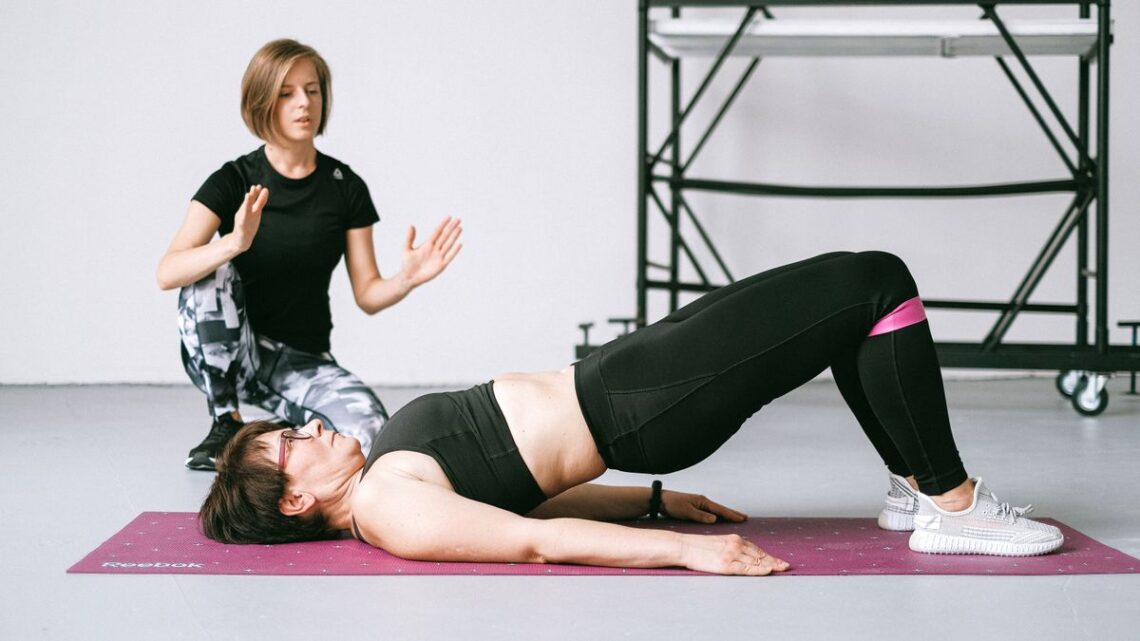
NICE guideline NG123 recommends supervised pelvic floor muscle training lasting at least three months as first-line treatment for stress or mixed urinary incontinence, with a programme of at least eight contractions performed three times a day.[1]
Two words in that sentence do the heavy lifting. Supervised means a physiotherapist or trained clinician checks that the right muscles are contracting, because a substantial share of people asked to squeeze the pelvic floor push down instead.
Three months means the schedule has to survive daily life for a full quarter.
Pooled trial data behind that recommendation are encouraging: improvement or cure was reported by 67% of women in training groups against 29% in control groups.[5] Those are subjective ratings, but they are the outcome patients care about.
What the 12-year follow-up showed
Researchers at University Medical Centre Utrecht sent a validated questionnaire to participants of the PORTRET trial, which had randomised women with moderate to severe stress incontinence to physiotherapy or midurethral sling surgery.
Of 386 women, 184 replied, a response rate of 47.7%.[2]
On intention-to-treat analysis there was no statistically significant difference between the two groups.
That headline is misleading on its own, because 86.9% of the physiotherapy group had already moved on to surgery, so by year 12 the two groups largely contained the same treatment.[2]
The post hoc comparison is the informative one.
Women who had physiotherapy only reported substantially less improvement than those who had surgery, whether the surgery came first or followed physiotherapy, with an absolute difference of about 50 percentage points. Re-operation was reported by 4.6%.[2]
The right reading is not that training fails. It is that for symptoms already at the moderate-to-severe end, training alone often does not finish the job, and starting with it costs little because it does not close off the surgical option.
Where app-based and online training fits
A meta-analysis published in Frontiers in Public Health in August 2026 pooled 12 randomised trials and 1,647 women comparing app-delivered training with usual care. Adherence was 42% higher in the app groups, and leakage episodes fell by about 2.3 per day.[3]
The authors were careful about their own result. The size of the symptom improvement may sit below the threshold that patients would notice, and the certainty of the evidence was rated low.
Their conclusion was that apps should complement supervised training rather than replace it.[3]
That is a reasonable position. The failure mode of pelvic floor training is not lack of information but lack of repetition, and a reminder on a phone addresses exactly that, while checking whether you are contracting correctly still requires a person.
Postpartum and older adults are different problems
A separate 2026 review of 16 trials of online training found a clear reduction in postpartum incontinence, with incidence 44% lower than control, alongside a modest reduction in symptom severity.[4] Adherence improved as well.
In older participants the same review found no statistically significant improvement in symptom severity; only adherence improved.[4] Ageing tissue, weaker baseline muscle and a higher share of urge-type symptoms all plausibly contribute.
This is why a single answer to whether pelvic floor exercises work is unhelpful. In a 32-year-old six months after delivery they prevent a problem from settling in. In a 72-year-old with long-standing leakage they are a starting point rather than a solution.
Men and Urge Incontinence Are Separate Questions
Almost all of the trial evidence comes from women. Pelvic floor training is also recommended for men after prostate surgery, but the evidence base is thinner and results vary a great deal with how much recovery has happened and when training began.
Urge incontinence is a different problem again. Instead of leaking when pressure rises, the person gets a sudden need to go that is hard to defer, driven by the bladder muscle contracting on its own. Bladder training schedules and medication are used alongside exercises here.
Mixed incontinence, where both patterns are present, is common. Training still belongs in first-line treatment, but keeping a short diary of when leaks happen makes it much easier to decide which problem to tackle first.
When training fails, the reason is usually one of three things: the wrong muscles are being used, the three daily sets are not being completed, or the programme is abandoned after a few weeks. The third is the most common.
Body weight, constipation and a chronic cough matter too. If something keeps raising the pressure inside the abdomen, it works against whatever the training has built.
Limitations of the Pelvic Floor Exercises Evidence
Almost all of these outcomes are self-reported, and incontinence is a symptom people under-report to strangers and over-report on questionnaires. Blinding is impossible, since participants know whether they were told to exercise.
The 12-year study also lost more than half its participants to follow-up, and women who are doing badly are more likely to answer a questionnaire about a symptom than women who have forgotten about it.
Almost all of the trials studied women, so the evidence for men after prostate surgery is much thinner.
Pelvic Floor Exercises, Practical Points
Find the muscles before counting repetitions. The correct action is a lift and squeeze inward, as if stopping wind, without tightening the buttocks or holding your breath. If you cannot feel it, that is the reason to see a pelvic health physiotherapist rather than to try harder.
Attach the sets to fixed daily events rather than to a time of day, and expect the first noticeable change at six to eight weeks.
Consistency over months is what separates responders from non-responders, much as core training for low back pain depends on gradual weekly progression rather than intensity.
If leakage is soaking through clothing, waking you at night, or has not improved after three honest months, that is the point to discuss other options rather than to keep repeating the same programme.
| Aspect | Finding |
|---|---|
| Recommended dose | At least 8 contractions three times a day, supervised, for at least three months |
| Reported benefit | 67% of women in training groups reported improvement or cure, against 29% of controls |
| 12-year follow-up | 86.9% of the physiotherapy group had crossed over to surgery; no significant difference on intention-to-treat |
| Post hoc difference | Physiotherapy-only women reported about 50 percentage points less improvement than surgical groups |
| Re-operation rate | 4.6% among women who had surgery |
| App-based training | Adherence 42% higher and about 2.3 fewer leakage episodes a day, at low certainty |
| Postpartum versus older adults | Incidence 44% lower after delivery; no significant severity benefit in older participants |
References
- National Institute for Health and Care Excellence, NG123: Urinary incontinence and pelvic organ prolapse in women.
- Twelve-Year Follow-Up of a Randomised Controlled Trial Comparing Pelvic Floor Muscle Training Versus Mid-Urethral Sling Surgery, BJOG, February 2025.
- Efficacy of mobile apps for urinary incontinence in women: a meta-analysis, Frontiers in Public Health, 18 August 2026.
- The Rehabilitative Effects of Online Pelvic Floor Muscle Exercises Across Various Life Stages, International Journal of Nursing Practice, 2 August 2026.
- NIHR Evidence: Pelvic floor muscle training can improve symptoms of urinary incontinence.