Meta Muse is a personal AI agent that Meta released in the U.S. on September 8, 2026. Within two weeks it became the most downloaded free iPhone app in the country. On September 21, the market reaction reached well beyond Meta: Intel closed up about 12% and AMD about 10%, which pushed AMD past $1 trillion in market value for the first time.
The short answer to why a consumer app moved chip stocks is the way Muse is built. Each user’s agent runs on its own virtual computer in Meta’s data centers. Virtual computers run on server CPUs, so investors read Muse’s downloads as a forecast of CPU demand, not only GPU demand.
This article covers what Muse does, what happened in the market on September 21, and why agents use so many CPUs. It then looks at which chipmaker is actually positioned to supply that demand, and what has not been confirmed yet.
Meta Muse, number one on the App Store in under two weeks
Meta announced Muse on September 8 as an agent that completes tasks instead of only answering questions. It can send emails, book travel, fill out forms and make purchases. It also keeps track of a user’s preferences and can build a plan for a longer goal, then carry out the steps.
Muse runs on Muse Spark, Meta’s own model family. Version 1.3 shipped on September 2, six days before the app. There is a free tier, plus paid plans at $20 and $100 a month depending on usage. The app is available on iOS, Android, the muse.ai website and inside WhatsApp.
Integrations are built in from the start. Payments go through Stripe’s Link with purchase protection, Shop Pay support is coming soon, and logins are handled through the password manager 1Password. Muse also connects to Gmail, Google Calendar and the restaurant booking service OpenTable.
Meta is using Muse to build a consumer AI business on top of the billions of people who use its apps. The paid tiers make it a test of whether Meta can earn AI revenue from subscriptions rather than only from advertising.
The download numbers came in faster than many expected. According to Sensor Tower, Muse recorded about 730,000 downloads in roughly the first five days. It passed ChatGPT as the top free iOS app in the U.S. on Friday, September 18, and by Monday its total had passed 2.5 million downloads, about 1.5 million on iOS and 1.1 million on Android.
Sensor Tower also compared Muse with other AI apps over the same 13-day window after each launch. Claude recorded about 400,000 downloads and Grok about 200,000. ChatGPT, still the benchmark, logged 3.1 million. Muse sits between them, much closer to ChatGPT than to the other two.
Wall Street’s early reviews were positive. Piper Sandler analyst Tom Champion told CNBC that Meta has developed a very potent product, and Bloomberg reported that the app was drawing strong early reviews from users.
Source: Meta Newsroom, CNBC, Stocktwits
Meta Muse and the September 21 rally in chip stocks
The week before had been weak. The Dow fell 1.7%, its worst week since March, and the S&P 500 slipped about 0.1%. Tension in the Middle East kept oil near $100 a barrel, and the 10-year Treasury yield had climbed to around 5%.
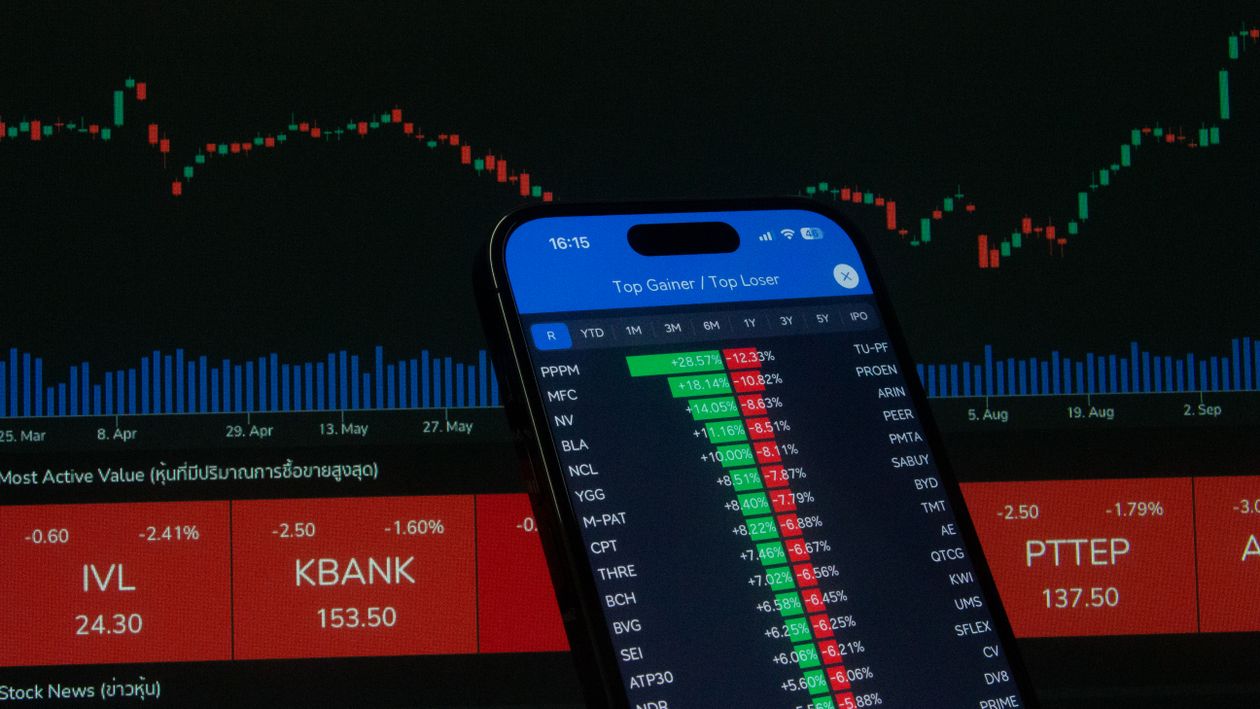
The Nasdaq Composite rose 2.26% on Monday, September 21, and closed at a record 27,122.09. It was the index’s first record close since June. The S&P 500 gained 1.49% to 7,764.70. U.S. crude fell 4.5% and the 10-year yield eased to about 4.95%, which helped, but most of the gain came from technology shares.
Meta itself closed up 11.34%. CNBC noted it was on pace for its best day since April 9, 2025. The stock had also jumped 6.6% on September 9, the day after Muse was announced. Part of the push came from Wells Fargo analyst Ken Gawrelski, who raised his price target from $640 to $796 and kept an overweight rating, citing early demand for Muse.
The larger surprise was in semiconductors. Intel closed up 12.17% and AMD 9.95%. AMD touched an intraday high of $613.92, enough to lift its market value just above $1 trillion. Qualcomm added more than 9%, and Arm rose about 13% during the session.
None of those chip companies announced anything that day. There was no new order, no earnings report and no product launch. The move was investors repricing CPU makers on the idea that Muse-style agents will need far more server processors than chatbots do.
PC-related news that day went the other way. HP said it expects industrywide PC unit volumes to fall by a mid-single-digit percentage in 2027, and its shares dropped 3.39%. The contrast shows where investors placed their bet: on data center servers, not personal computers.
Source: TheStreet, CNBC, The Motley Fool

Meta Muse, one virtual computer per user and why that means CPUs
A chatbot takes a question, runs it through a model on a GPU and returns text. The work ends when the answer is sent. An agent like Muse keeps going. It opens web pages, logs in to services, reads email, fills out forms and waits for replies, sometimes for minutes or hours.
For Meta Muse, the company solves this by giving every user a dedicated virtual machine, which it calls the Muse Secure VM. That machine holds both the agent and the user’s data, and it is isolated so no other user’s agent can reach it. A second program, the Sentinel agent, runs on the same machine. Nothing Muse does reaches the internet unless Sentinel approves it, and Sentinel asks the user before sensitive steps such as sending an email or paying for something.
Take a restaurant booking. A user asks for a table for four on Friday night. Inside its virtual machine, Muse opens a browser, checks the calendar for free time, searches a booking site, summarizes the options, gets the user’s approval, confirms the reservation and emails the guests. The model makes a decision only a few times in that sequence. Most of the time is spent loading pages and waiting for responses.
The model’s reasoning still runs on GPUs. Almost everything around it runs on CPUs: the operating system inside each virtual machine, the browser, the data moving in and out, and the scheduling that decides which task runs next. A GuruFocus report put it this way: persistent agents need CPUs for operating systems, data movement, orchestration and background work around inference.
The key difference is time. A chatbot spends seconds on each answer. An agent keeps its virtual machine running and continues working after the user closes the app. With the same number of users, agents occupy servers for much longer and need more CPU capacity. 24/7 Wall St. wrote that agentic AI could materially raise the CPU footprint per unit of compute.
Source: Meta Newsroom, GuruFocus via Yahoo Finance, 24/7 Wall St.
Intel, AMD or Arm: who supplies the CPUs for agents
AMD had been making this argument before Muse arrived. On AMD’s second-quarter earnings call, CEO Lisa Su said the company sees “agentic sandboxes” becoming the largest and fastest-growing piece of its server CPU market, while noting it is the smallest piece today. AMD estimates the server CPU market could reach about $220 billion by 2030.
Its results support the claim. AMD’s second-quarter revenue rose 50% from a year earlier to $11.5 billion, and data center revenue more than doubled, up 107% to $6.7 billion. Meta is also an AMD customer: in February the two signed an agreement covering graphics chips for up to 6 gigawatts of capacity.
AMD shares were already rising before Muse. The stock gained 8% the previous week after cloud provider Nebius said on Thursday, September 17, that it would raise prices for some services. A shortage of computing capacity was already visible, and Muse added one more source of demand.
Intel shows the supply side. CEO Lip-Bu Tan has said the company can currently meet only about half of customer demand for its processors. With demand far above supply, Intel cannot quickly sell many more chips even if agent demand grows. That shortage is also why Intel raised CPU prices again this autumn, which we covered in our analysis of Intel’s third CPU price increase in a year.
The third candidate is Arm. On March 24, 2026, Meta announced it would co-develop a data center processor with Arm, the Arm AGI CPU. According to Meta, the chip is designed for large-scale agentic AI, and Meta is the lead development partner. If Muse’s virtual machines run on that chip, more of the benefit could go to Arm than to Intel or AMD.
Market-size forecasts also differ. AMD puts the server CPU market at about $220 billion by 2030, while Arm estimates about $120 billion for the same year. The gap partly reflects different definitions, but a forecast range that wide is itself a sign of how uncertain this market is.
Meta has plenty to spend. On July 29 it guided 2026 capital expenditures to $130 billion to $145 billion, and it spent $31 billion in the second quarter alone. It has not said how much of that goes to CPU servers.
Source: The Motley Fool, Benzinga, Meta Newsroom, Meta Investor Relations

What the numbers support and what they do not
The case for CPU demand is logical, but the evidence so far is thin. Muse’s 2.5 million downloads are a strong start for a new app. Next to the 3.6 billion people who used Meta’s apps each day in June, they are still less than 0.1%. A download also does not mean a paying user, or a user who runs long agent tasks every day.
There is also no direct link yet between Muse and any chip order. The GuruFocus report on Intel stressed that Muse is not a confirmed Intel design win, purchase order or revenue guarantee. Meta has not said which processors run the Muse virtual machines, and the February AMD agreement mentioned above covers graphics chips, not server CPUs.
Valuations differ too. GuruFocus said Intel’s stock trades 269% above its own fair-value estimate. Meta, by contrast, still traded at less than 27 times earnings after the jump, according to The Motley Fool. Stocks that rose on the same news carry very different amounts of expectation in their prices.
The first test of those expectations will come in the chipmakers’ next results. Intel, AMD and Arm report quarterly earnings between late October and early November. How much server CPU revenue grew, and whether management puts numbers on agent demand, will be the first evidence for or against the September 21 rally.
Prices are the other part of the picture. AMD is reportedly telling partners it will raise prices on GPUs, AI chips and chipsets by about 10% in the fourth quarter, as TSMC’s costs rise. Intel is making a similar increase in October. If demand for agent servers does grow, chipmakers are positioned to charge more for each processor, not only to sell more of them.
| Item | Figure | Date |
|---|---|---|
| Muse downloads, first ~5 days | About 730,000 | Sep 8–13 |
| Muse downloads, total | More than 2.5 million | As of Sep 21 |
| Meta share price move | +11.34% | Sep 21 |
| Intel / AMD share price move | +12.17% / +9.95% | Sep 21 |
| AMD server CPU market estimate | About $220 billion | By 2030 |
| Meta 2026 capex guidance | $130–145 billion | Announced Jul 29 |
| AMD planned price increase | About 10% | Q4 2026 |
Source: GuruFocus via Yahoo Finance, The Motley Fool, TrendForce

Amazon’s block and Meta Connect: the next tests
The first open conflict arrived over the weekend of September 19–20. Amazon began blocking Muse from shopping on its site and showed users a pop-up that cited a terms-of-service violation. Meta reportedly declined Amazon’s request to remove the feature.
Amazon spokesperson Lara Hendrickson said third-party apps that buy on a customer’s behalf “should operate openly and respect service provider decisions.” Amazon runs its own shopping AI, so it has reasons to resist another company’s agent taking over its customer relationship.
That dispute matters for the chip story too. An agent is only useful if the sites it visits let it in. If large retailers and service providers close their doors, agents will do fewer tasks, and each user will need less server time.
The next data point for Meta Muse is Meta Connect, the company’s annual product event, which begins on Wednesday, September 23. Investors will look for updated user numbers, the share of users on the $20 and $100 plans, and any comment on how much computing capacity Muse is consuming. Those figures will show whether September 21 priced in real CPU demand or only an expectation of it.
Meta has also said Muse is coming to its AI glasses, so any timeline for that at Connect will matter. Glasses have little computing power of their own, so most agent work would have to run in data centers. If more people use Muse through glasses, the service could depend on servers even more than the phone app does.
Source: Stocktwits, The Motley Fool