
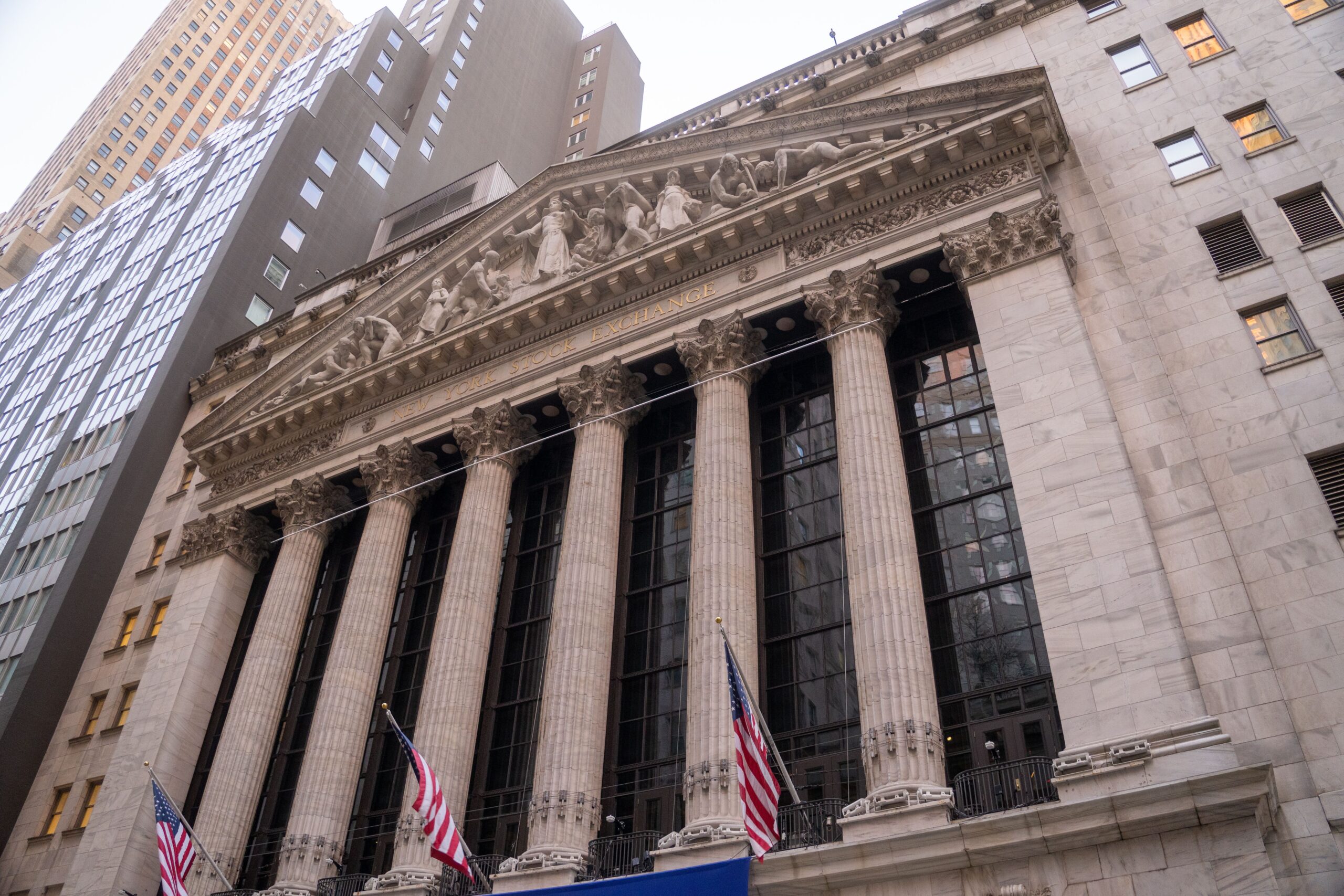
Caption: The facade of the New York Stock Exchange building in Lower Manhattan. Wall Street closed out the week of August 10-14 with the S&P 500 near record highs even as Friday’s session slipped slightly.
Source: Pexels (free license)
1. US Markets & Fed
Wall Street’s most recently completed regular session — Friday, August 14, 2026 — ended in a mixed, slightly lower note as investors booked profits after a record-setting week. The S&P 500 closed at 7,785.76, down 0.2% on the day, while the Nasdaq Composite fell 0.3% to 26,729.16 and the Dow Jones Industrial Average slipped 107.58 points, or 0.2%, to 53,732.41.
Despite Friday’s pullback, all three indexes still posted gains for the week: the S&P 500 rose 0.4% (its third straight weekly gain after touching a fresh all-time high above 7,800 on Thursday), the Nasdaq added 0.1%, and the Dow fell 0.6% on weakness in healthcare and industrial shares. The small-cap Russell 2000 stood out, closing at a fresh record near 3,070, up 0.54% on the day.
Softer-than-expected producer price data on Thursday, following a benign consumer price report on Wednesday, eased investor worries that the Federal Reserve would need to raise rates again in September. However, U.S. retail sales fell 0.6% in July to $763.6 billion, missing economists’ forecast for a 0.1% increase, a reminder that consumer spending momentum is cooling.
“Markets are ending the week with US equities close to record highs after inflation data reduced fears that the Federal Reserve will need to tighten again in September,” said Daniela Hathorn, senior market analyst at Capital.com. She added that while CPI is moving in the right direction, it remains above target, and longer-dated Treasury yields remain elevated on concerns about fiscal borrowing.
Adding a geopolitical undertone to the session, oil prices edged higher — WTI crude rose to $81.71 a barrel — after the U.S. threatened to maintain an indefinite naval blockade on Iran following reported attacks on tankers near the Strait of Hormuz. With no FOMC meeting scheduled in August, investors are now looking ahead to the Fed’s Jackson Hole symposium, set for August 27-29, for the next major signal on policy direction.
Source: TheStreet, Yahoo Finance
2. AI Software

Caption: A smartphone displaying the ChatGPT interface. OpenAI’s revenue run-rate has reportedly topped $40 billion as the company prepares for a possible September stock market debut.
Source: Pexels (free license)
OpenAI is heading into the back half of August with fresh momentum ahead of its planned IPO. According to Bloomberg, reporting on August 13, the company’s annualized revenue run-rate has surpassed $40 billion, roughly double where it stood at the end of 2025, bolstering the case for what could become one of the largest tech listings in history when it targets a September debut.
On the product side, OpenAI also announced on August 13 that it appointed Dali Rajic as its new Chief Revenue Officer, previewed an “Ultrafast” mode for its GPT-5.6 Sol model that runs up to 14 times faster than standard processing, and began testing advertisements inside ChatGPT. The company said earlier this month, on August 6, that ChatGPT had crossed 1 billion users.
The moves come as competition intensifies among AI software leaders. Palantir, for instance, has been a standout performer this earnings season: when it reported second-quarter results on August 4, revenue grew 93% year-over-year to $1.94 billion, with commercial revenue up 149%, as CEO Alex Karp pitched “AI sovereignty” — letting enterprises and governments keep their data away from frontier labs like OpenAI, Google and Anthropic — as a key growth driver.
Analysts say the common thread across both stories is monetization: after a year defined by model releases, investors are now scrutinizing whether AI software companies can convert usage and hype into durable, high-margin revenue before public listings and next earnings cycles test those claims.
Source: Bloomberg, OpenAI, CNBC
3. Semiconductors & AI Infrastructure

Caption: A close-up of a modern microprocessor and circuit board. Global memory chipmakers say the current AI-driven supply shortage could persist through 2028.
Source: Pexels (free license)
The AI memory squeeze kept intensifying this month. Micron Technology reclaimed a $1 trillion market valuation on August 12 after its shares jumped more than 7% to above $930, driven by broader AI infrastructure spending news: cloud provider CoreWeave raised its 2026 capital spending plan to as much as $39 billion, and optical component maker Lumentum more than doubled its quarterly revenue. Intel’s chief executive added that memory makers are now essentially sold out for the next two years.
Samsung Electronics has been even more explicit about the outlook. The company said its chip shortage is likely to worsen through 2027 and persist into 2028, even as it expands production, and it has been signing long-term, multi-year supply agreements with major hyperscale data-center customers — deals that reportedly include upfront payments and floor pricing to hedge its capital investment risk. Samsung’s semiconductor division posted an operating profit of roughly $61.7 billion for the second quarter, up more than 250-fold from a year earlier.
The supply crunch is now spilling over into other product categories: supply-chain reports this month indicate Apple may delay the launch of its standard iPhone 18 model to the first quarter of 2027, releasing only the higher-margin Pro, Pro Max and Ultra models this fall, as it prioritizes scarce advanced memory chips for its premium lineup (see Big Tech section below).
This scarcity narrative builds on Nvidia’s landmark memory partnership with SK hynix, announced in late July, under which the two companies are co-developing next-generation high-bandwidth memory for Nvidia’s upcoming Vera Rubin AI supercomputers in a deal reportedly worth more than $500 billion over its life. Industry analysts say the memory shortage — not GPU supply — has become the single biggest bottleneck constraining how fast the AI buildout can scale.
Source: Benzinga, TechCrunch, NVIDIA Newsroom
4. Big Tech (M7)

Caption: A close-up shot of a modern smartphone. Apple is reportedly reshaping its iPhone 18 launch lineup as memory chip shortages ripple through the industry.
Source: Pexels (free license)
Apple is at the center of this week’s Big Tech supply-chain story. Multiple supplier-sourced reports this month indicate that Apple will release only the iPhone 18 Pro, Pro Max, and a new iPhone Ultra model this September, while delaying the standard iPhone 18 to around the first quarter of 2027. Analysts say the split launch reflects Apple securing scarce advanced memory chips for its higher-margin Pro-tier devices first.
Separately, Apple has reportedly partnered with China’s Alibaba Group to co-develop an AI model tailored for the Chinese market, which will power a China-specific version of Apple Intelligence expected to roll out there in the coming months — a notable example of a Magnificent Seven company adapting its AI strategy to local regulatory and competitive conditions.
The broader Magnificent Seven cohort remains a key swing factor for the market: the Roundhill Magnificent Seven ETF (MAGS), which tracks Alphabet, Amazon, Apple, Meta, Microsoft, Nvidia and Tesla in equal weight, was little changed heading into the weekend, reflecting a market still digesting a strong late-July earnings season in which Microsoft, Amazon and Meta all posted robust AI-driven cloud and advertising growth.
With Nvidia’s fiscal second-quarter earnings call set for August 26 — where management has guided for roughly $91 billion in quarterly revenue — investors are treating the next two weeks as a critical test of whether the AI capital-spending story can keep justifying Big Tech’s valuations.
Source: TechRepublic, TheStreet
5. EV & Battery
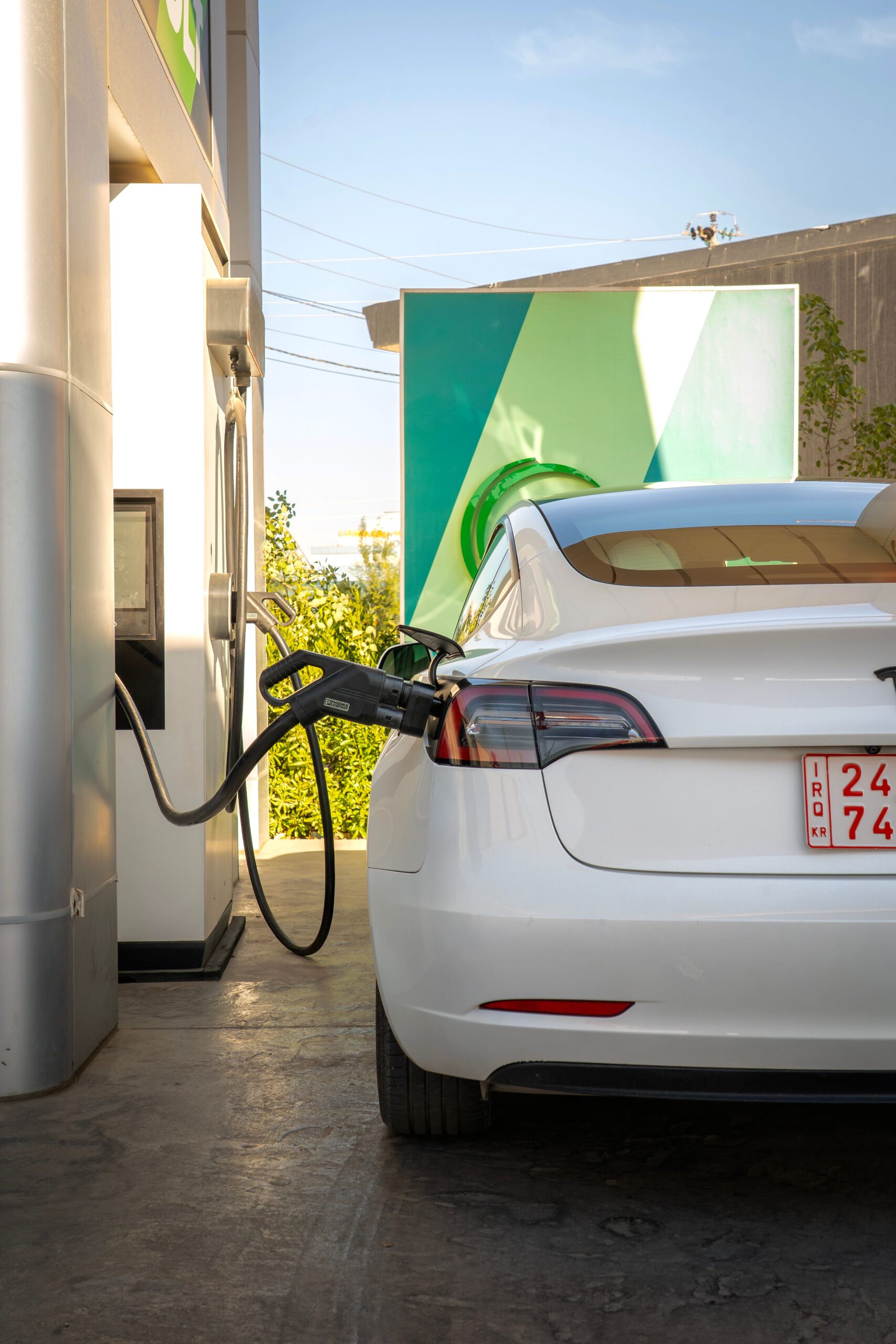
Caption: A Tesla Model 3 plugged in at a public charging station. Tesla recently marked its 10-millionth vehicle produced, a milestone reached just six years after its one-millionth car.
Source: Pexels (free license)
Tesla passed a major manufacturing milestone earlier this month: on August 1, a Diamond Black Model Y rolled off the line at its Fremont, California factory as the company’s 10-millionth vehicle produced worldwide, making Tesla the first dedicated EV maker to reach that scale. The company’s first million vehicles took roughly 12 years to produce; the next nine million took just over six.
Tesla shares also got a lift on Friday, August 14, closing up 0.68% at $342.27 after Reuters reported that a revamped Roadster — potentially featuring cold-gas thrusters co-developed with SpaceX — could be showcased as soon as this month at SpaceX’s McGregor, Texas test site. Tesla has not confirmed the event or offered any production and delivery timeline, and Wall Street remains split on the stock, with analyst price targets ranging from $125 to $600.
On the battery side, South Korea’s Samsung SDI returned to operating profit in the second quarter for the first time in seven quarters, posting revenue of about $2.59 billion, up 18.5% year-over-year, and confirmed it remains on track to begin U.S. production of LFP battery cells in the third quarter of this year, with customer deliveries starting before year-end.
In China, CATL and BYD together controlled 54.3% of the global EV battery market in the first half of 2026, with CATL’s installations up 25.3% year-over-year to a 39.9% share, while BYD’s share slipped to 14.4%. Both companies are now racing toward 2027 trial production of solid-state battery cells, a technology widely seen as the next major leap in EV range and charging speed.
Source: TS2.tech (via Reuters), Energy-Storage.News, CnEVPost