
Many women notice that planning, focusing and switching between tasks gets harder around the menopause transition. A Rutgers randomized trial now reports that six months of aerobic exercise improved exactly those skills, and that the benefit was largest in postmenopausal women.[1]
The study was led by Sharon Sanz Simon, an assistant professor of psychiatry at Rutgers New Jersey Medical School, and published in the Journal of Alzheimer’s Disease. It matters because two-thirds of Alzheimer’s diagnoses occur in women.[2]
Who Was Studied and How
The trial enrolled 93 healthy women aged 20 to 67, of whom 43 percent were postmenopausal. Crucially, all of them started with below-average cardiorespiratory fitness and none were exercising regularly.[1]
That entry criterion makes the result unusually applicable. These were not athletes getting fitter; they were sedentary women starting from a low base, which is where most people actually begin.[1]
Participants were randomly assigned to one of two six-month programs, either aerobic exercise or a stretching-and-toning routine. Cognitive performance was measured repeatedly to track change across the trial.[1]
What Improved, and What Did Not
Postmenopausal women in the aerobic group showed greater gains in executive function, measured through standardized tests of task-switching speed and error management, than women in the stretching group.[1]
They also outperformed premenopausal women doing the same aerobic program, which is the finding that gives the study its point. Menopausal status appeared to change how much the brain gained from identical training.[1]
The gains were specific. Memory and processing speed did not improve in the same way, so this is a result about the executive control system of the brain rather than about cognition in general.[1]
The Timing of the Benefit
Measurable cognitive gains appeared three months into the program and continued to strengthen through the full six months, according to Sanz Simon. That is a slower curve than many people expect from exercise.[1]
Adherence was reasonable rather than perfect. About 8 in 10 participants completed at least three months and about 7 in 10 completed the full six months, which is worth noting for anyone planning a similar routine.[1]
The Protocol the Researchers Describe
Rutgers Brain Health Institute experts translated the findings into a practical approach: three to four one-hour sessions per week, sustained for at least three to six months.[1]
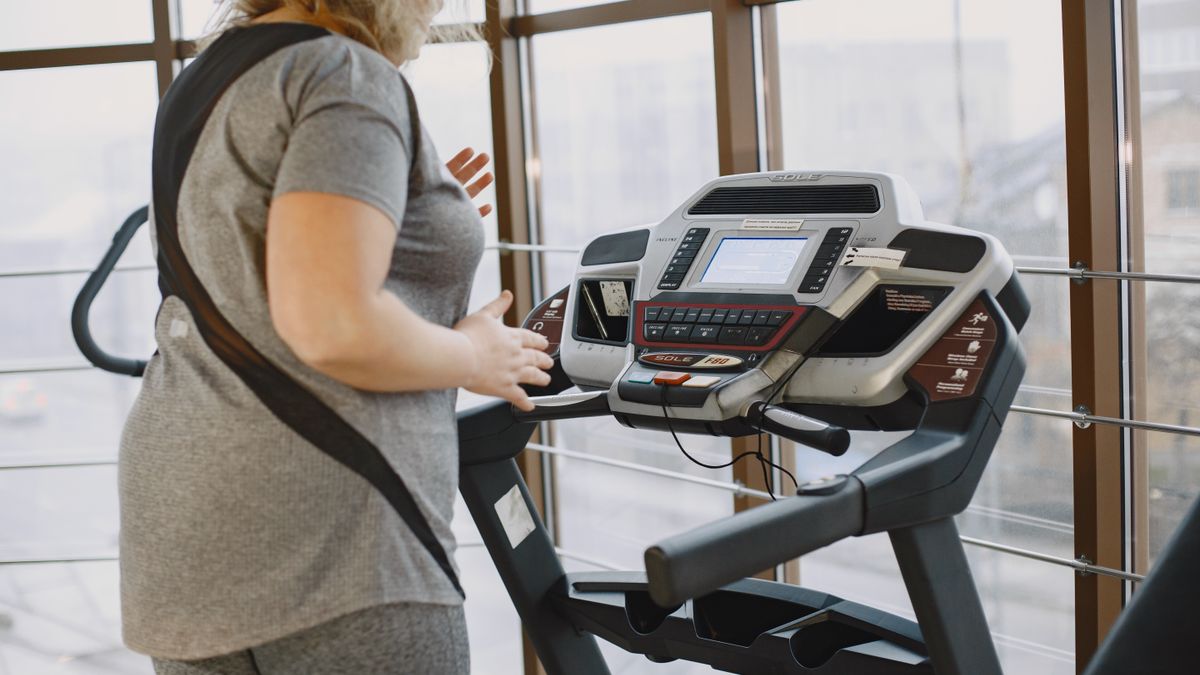
Each session opens with a 10 to 15 minute warm-up and gentle stretching, then 45 minutes of continuous moderate aerobic activity. Brisk walking, light jogging, cycling, elliptical training, swimming, water aerobics and dance cardio all qualify.[1]
Consistency matters more than the specific activity chosen, and intensity should progress gradually rather than starting hard. The institute has published a fuller toolkit covering intensity guidance, adherence strategies and safety notes.[1]
Limits Worth Keeping in View
Ninety-three participants is a small sample for a cognitive trial, and this is a single study rather than a body of replicated evidence. The women were healthy, so the result may not transfer to those with existing cognitive impairment.[1]
The trial also measured test scores over six months, not dementia over decades. Better executive function is a plausible step toward brain protection, but it is not the same as a demonstrated reduction in Alzheimer’s risk.[2]
| Aspect | Detail |
|---|---|
| Institution | Rutgers Brain Health Institute and Rutgers New Jersey Medical School |
| Participants | 93 healthy women aged 20 to 67; 43 percent postmenopausal |
| Baseline | All had below-average cardiorespiratory fitness and were not exercising regularly |
| Design | Six-month randomized trial: aerobic exercise versus stretching and toning |
| Main result | Larger executive function gains in postmenopausal women in the aerobic arm |
| Timing | Measurable gains at 3 months, still strengthening at 6 months |
| Not improved | Memory and processing speed showed no comparable gain |
| Suggested routine | 3 to 4 sessions per week, 45 minutes of continuous moderate aerobic work |
| Adherence | About 80 percent reached 3 months; about 70 percent finished 6 months |
| Publication | Journal of Alzheimer’s Disease, 2026. DOI 10.1177/13872877261471900 |
References
- Rutgers University, via Medical Xpress, Stay sharp after menopause: how aerobic exercise can improve key thinking skills, September 1, 2026.
- Sanz Simon S, et al. Can menopausal status moderate the effects of aerobic exercise on executive functions? Evidence from a randomized controlled trial. Journal of Alzheimer’s Disease, 2026. DOI: 10.1177/13872877261471900
- Rutgers Brain Health Institute, evidence-based aerobic exercise toolkit for cognitive health, 2026.