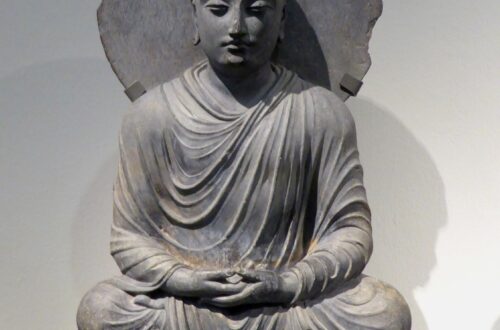

Arthur Schopenhauer (1788–1860) is usually filed under “the pessimist” in survey courses on Western philosophy, as if pessimism were a mood rather than an argument. In his major work, The World as Will and Representation, he proposed that the deepest force driving every living thing is not reason but a blind, insatiable Will — a striving that never stays satisfied for long and manufactures a new want the instant an old one is met. Late in life he applied that idea directly to everyday existence in a short, startlingly candid essay usually translated as “On the Sufferings of the World,” part of his 1851 collection Parerga and Paralipomena. It is one of the most quoted — and most misunderstood — pieces of writing in the history of philosophy.
Misunderstood, because readers who stop at the diagnosis assume the essay ends in nihilism. It doesn’t. Schopenhauer spends most of the piece building an unsparing case that pain, not pleasure, is the default setting of existence — and then, almost without warning, pivots to a practical conclusion about how to treat other people. The argument is worth walking through slowly, because the destination only makes sense once you’ve followed the route.
Pain is the rule, not the exception
Schopenhauer opens with a claim designed to stop the reader cold: “Unless suffering is the direct and immediate object of life, our existence must entirely fail of its aim.” His reasoning is less dramatic than it sounds. He observed that what we call happiness is almost never an independent, positive sensation — it is the relief that follows the removal of some want or pain. Food tastes good because we were hungry; health feels precious only to someone who has been sick. Pleasure, in his account, is parasitic on the absence of an antecedent suffering.
Pain, by contrast, he treats as the one truly positive, self-announcing force in life. “Evil is just what is positive; it makes its own existence felt,” he wrote, turning against the long philosophical tradition — running from the Stoics through Leibniz — that treated evil as a mere privation of good. If that tradition were right, he argued, pleasure and pain should roughly balance out. His proposed test is characteristically blunt: compare the felt experience of an animal eating another animal. The satisfaction of the one and the terror of the other are not remotely equivalent weights on a scale.
Lambs under the eye of the butcher
The essay’s most famous image follows directly from that imbalance: “We are like lambs in a field, disporting themselves under the eye of the butcher, who chooses out first one and then another for his prey. So it is that in our good days we are all unconscious of the evil Fate may have presently in store for us — sickness, poverty, mutilation, loss of sight or reason.” The point isn’t merely that bad things happen. It’s that our sense of security on any given ordinary day is itself an illusion generated by not yet having been chosen — not by any actual safety.

Why thinking animals suffer more than instinctive ones
One of the essay’s sharper turns is the claim that reflection, the very faculty that makes humans “higher” than other animals, is also what makes us more miserable than they are. An animal in pain suffers only in the present moment; it has no capacity to store up dread of tomorrow or resentment about yesterday. Humans do. Memory and foresight let us “condense and store up” pleasures and sorrows alike, which is why a single piece of bad news can wreck a week, not just a moment.
Worse, Schopenhauer notes, reflection invents entire categories of suffering that animals never experience at all — ambition, wounded pride, status anxiety, and above all boredom, which he calls “a form of suffering unknown to brutes.” He was unimpressed by the wealthy people of his day who filled their idle hours with restless travel, writing that their prosperity becomes “a punishment by delivering them up to the misery of having nothing to do.” Two and a half centuries before the term existed, he had essentially diagnosed the empty scroll.
Time as a taskmaster, old age as a quiet betrayal
Schopenhauer also has a memorable line on the psychological pressure of time itself: existence is tormented by the sense that “Time is continually pressing upon us, never letting us take breath, but always coming after us, like a taskmaster with a whip.” The only moment time seems to loosen its grip, he adds dryly, is when we are stuck in boredom — which is its own kind of suffering.
He is particularly unsentimental about aging. Everyone wants to live long, he observes, and yet longevity simply means arriving at “a state of life of which it may be said: it is bad to-day, and it will be worse to-morrow; and so on till the worst of all.” When old friends reunite after decades apart, he suggests, what actually passes between them wordlessly is mutual disappointment — a shared, unspoken recognition that life “promised so much, and then performed so little.”
An uncomfortable question about bringing children into the world
From here Schopenhauer poses one of his most provocative rhetorical questions, one that modern antinatalist philosophy still cites as an ancestor argument: “If children were brought into the world by an act of pure reason alone, would the human race continue to exist?” He isn’t issuing a policy proposal; he’s testing whether we actually believe existence is a gift or whether, in practice, we hand it down out of instinct rather than considered judgment.
“Go to the priests, then” — a philosophy that refuses to console
Schopenhauer anticipated the objection that his outlook is comfortless, and he didn’t try to soften it: “I shall be told, I suppose, that my philosophy is comfortless — because I speak the truth; and people prefer to be assured that everything the Lord has made is good. Go to the priests, then, and leave philosophers in peace!” It’s a startlingly modern sentiment — a flat refusal to trade accuracy for reassurance, delivered two centuries before “toxic positivity” became a phrase people needed.
The world as a penal colony
The essay’s structural hinge, and the idea the whole piece has been building toward, is a single reframing: “If you want a safe compass to guide you through life, and to banish all doubt as to the right way of looking at it, you cannot do better than accustom yourself to regard this world as a penitentiary, a sort of penal colony.” Schopenhauer is careful to note he isn’t inventing this view — he traces it through the early Christian father Origen, through Brahmanism and Buddhism, through the Greek philosophers Empedocles and Pythagoras, and through Cicero’s remark that the ancients taught we enter this world to pay a debt incurred elsewhere.
The reframing sounds bleak, but Schopenhauer means it as relief, not despair. If you expect the world to be a fundamentally good, fair place, every hardship registers as a personal injustice — an intolerable exception that demands outrage. If instead you expect a penal colony, hardship stops being an anomaly. “You will regulate your expectations accordingly,” he writes, “and cease to look upon all its disagreeable incidents, great and small… as anything unusual or irregular.” Lowering the baseline, in other words, is itself a form of protection.
From pessimism to “my fellow-sufferer”
This is where the essay turns, and where its real payload sits. If everyone alive is serving the same sentence, Schopenhauer argues, then other people’s flaws stop being occasions for indignation and start being occasions for recognition: “when these faults appear in others, it is our follies and vices that we behold… faults that do not lie on the surface… but should anything call them forth, they will come and show themselves, just as we now see them in others.” Shared suffering, on this account, is the actual basis of ethics — not an abstract commandment to be kind, but the plain fact that everyone around you is absorbing the same blows you are.
He proposes, half-seriously, that we ought to greet one another not as “Sir” or “Monsieur” but as Soci malorum — fellow-sufferer, companion in misery. And he lands the essay on what is, by his standards, an almost tender note: this recognition “reminds us of that which is after all the most necessary thing in life — the tolerance, patience, regard, and love of neighbor, of which everyone stands in need, and which, therefore, every man owes to his fellow.”
A counterpoint worth holding onto
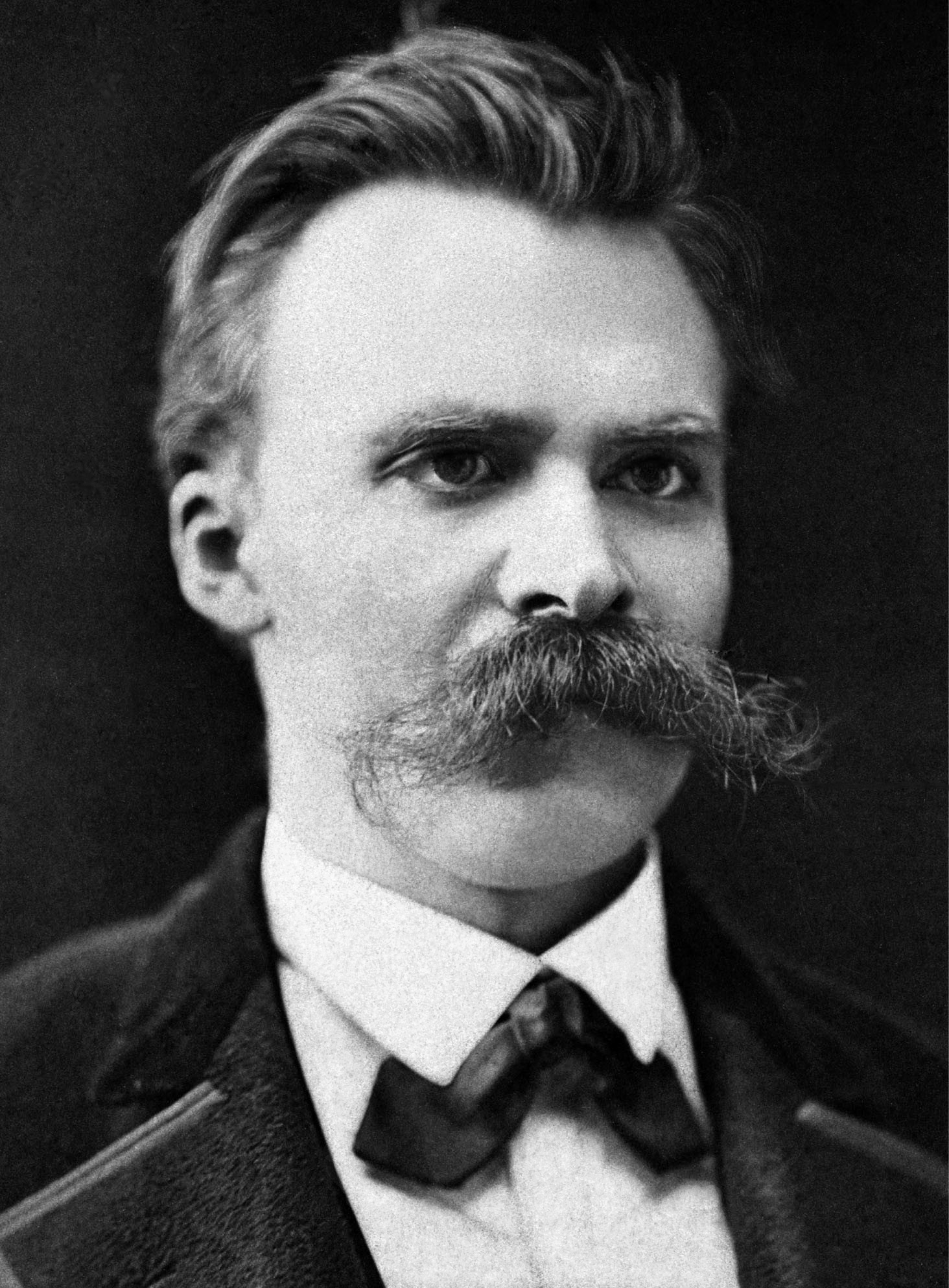
It’s worth saying plainly that Schopenhauer’s pessimism is a position, not a settled fact, and plenty of serious thinkers have pushed back on it. Nietzsche, who read Schopenhauer as a young man and later broke sharply with him, argued for amor fati — loving one’s fate, hardship included, rather than merely tolerating it as a sentence to be served. Contemporary psychology has its own version of the objection: humans are well documented to have a “negativity bias” that makes painful events feel more vivid and memorable than pleasant ones, which would mean Schopenhauer’s introspective evidence — that pain outweighs pleasure — might describe a bias in memory rather than a fact about experience itself. None of this refutes him outright, but it’s a reminder that “life is fundamentally suffering” is an argument with a very long history across several traditions, not a conclusion philosophy has closed the book on.
So how should any of this change how we live?
Read charitably, Schopenhauer’s essay isn’t an instruction to give up; it’s an argument for facing life without the specific illusion that it owes you a baseline of ease. Three practical threads run through it. The first is calibration: if you stop expecting contentment as the default state, ordinary hardship stops feeling like betrayal, and small stretches of calm start to register as something closer to gratitude. The second is normalization: treating pain as the general condition of being alive, rather than a personal exception, quietly dissolves a great deal of the “why me” resentment that makes suffering worse than it needs to be. The third, and the one Schopenhauer actually cared most about, is that this shared condition is supposed to soften us toward each other — less judgment, more patience, precisely because everyone you meet is carrying some version of the same weight, usually without announcing it.
None of that amounts to a self-help program, and Schopenhauer would probably have been suspicious of anyone who tried to package it as one. But there is something durable in an ethics built not on the assumption that people are basically fine and occasionally slip up, but on the assumption that everyone is quietly enduring something — which is, on the available evidence, closer to true.
Source: Arthur Schopenhauer, “On the Sufferings of the World,” trans. T. Bailey Saunders, in Studies in Pessimism (1891; essay originally published in Parerga and Paralipomena, 1851). Also excerpted in The Meaning of Life, ed. E. D. Klemke (Oxford University Press, 1981).