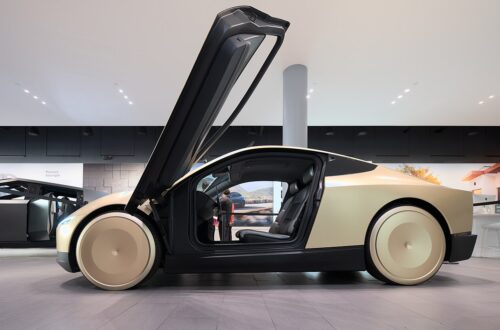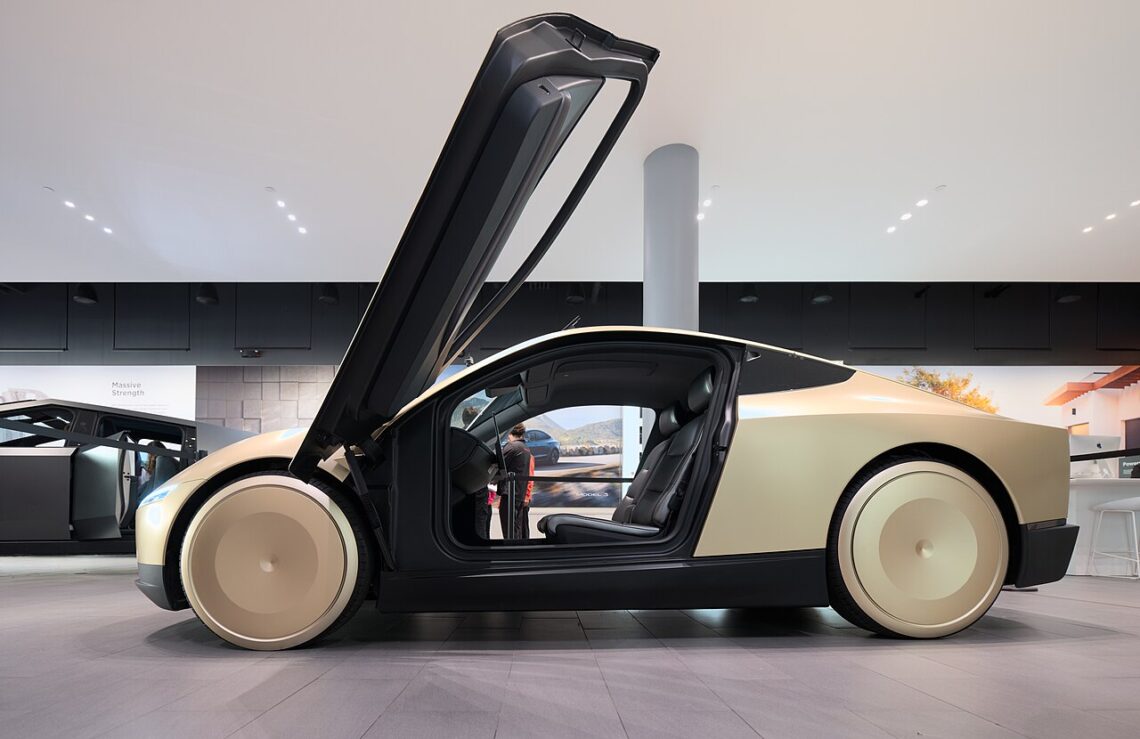
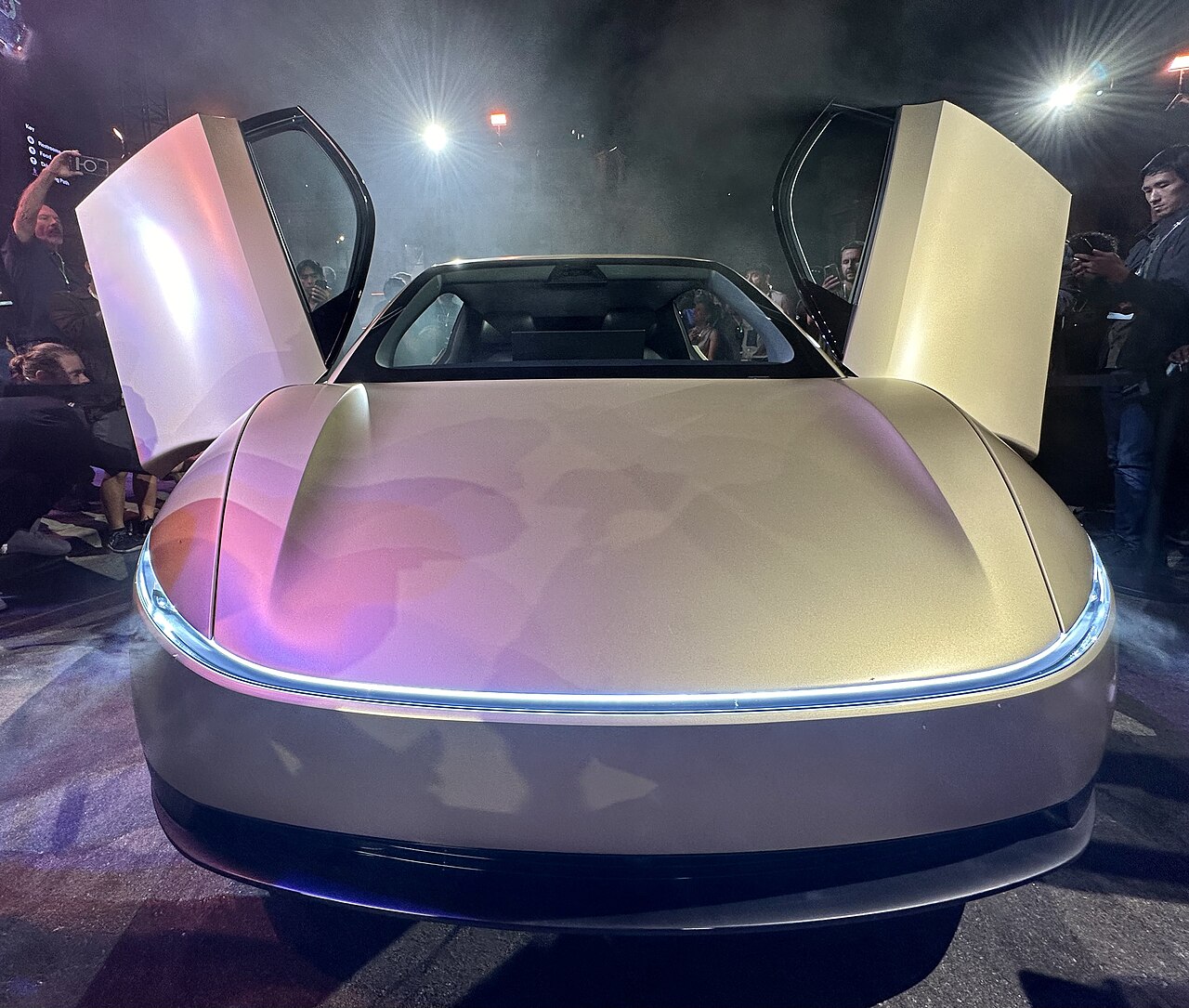
Tesla will open the doors of its Austin campus on Thursday, September 3, and show a two-seat car with no steering wheel and no pedals in a live commercial setting for the first time. The invitations went out to selected Robotaxi riders. The evening will be livestreamed.
But the number that best explains what Tesla is doing arrived four days before the event, and Tesla never announced it. According to the crowdsourced Robotaxi Tracker, the company now runs close to 200 vehicles with no safety monitor on board across Austin, Dallas and Houston. Three weeks earlier the same count sat near two dozen.
That is roughly a sevenfold increase, achieved quietly, in the window immediately before the hardware reveal. The ordering is the story. Tesla is not asking anyone to imagine a driverless fleet on the strength of a new vehicle shape. It is putting the fleet on the road first and letting the vehicle arrive into a business that is already running.
The number that changed while nobody was watching
Texas keeps a public ledger of this, which is why the scale-up could be measured before Tesla said a word. Operators of commercial autonomous vehicles file through the Texas Motor Carrier Credentialing System, and the entries are searchable by anyone.
On August 31, community trackers scraping that database recorded Tesla Robotaxi, LLC at 276 authorized vehicles in Texas. Of those, 269 were Model Ys and seven were purpose-built Cybercabs, the first time Cybercab VINs had appeared in the state lookup after a year of Model Y-only listings.
The Cybercab entries carry a 5YJA VIN prefix, distinct from the 7SAYG prefix on the Model Y robotaxis that make up the rest of the fleet. Within the same day the Cybercab count moved again, from seven to 45, a jump flagged by Tesla watcher Sawyer Merritt from the Texas DMV listing.
The legal frame for all of this is Texas Senate Bill 2807, which took effect in late May 2026. It created a self-certification route for commercial Level 4 operation: file through TxMCCS, attest to SAE Level 4 capability, carry insurance, and keep the vehicle list current.
It is worth being precise about what registration means. Filing a vehicle is the legal prerequisite for commercial driverless use, not proof that the vehicle is already carrying paying passengers unsupervised. The seven, then 45, Cybercabs are a permission slip, not a ridership figure.
The map moved too. Tesla widened the Austin service area to roughly 288 square miles, about nine percent larger than the previous 264, adding some 24 square miles that push north toward Pflugerville along the US 183 corridor and take in neighborhoods above the Domain along with areas such as Mesa Park.
That was the first geofence change in about ten months. Tesla began public Robotaxi operations in Austin in mid-2025 inside a zone of roughly 20 square miles, grew the map through 2025 and early 2026, then held it steady while it accumulated miles. The 288-square-mile zone is now one of the largest driverless service areas available anywhere in the United States.
Why Tesla let the fleet lead the hardware
The restraint that critics read as weakness was a design choice, and Tesla has been unusually explicit about the standard it set for itself. On the second-quarter earnings call, autopilot chief Ashok Elluswamy told investors the program had logged more than 380,000 unsupervised miles with zero notable incidents.
That is the gate Tesla built. Texas law would have permitted a far faster ramp; self-certification does not require a company to prove a mileage record before scaling. Tesla scaled slowly anyway, widening geofences first, then extending operating hours, then growing fleet size, each step small enough that a bad outcome would stay contained.
The cost of that discipline was reputational. For months the visible fleet hovered around two dozen cars, and skeptics used the gap between Tesla autonomy rhetoric and Tesla autonomy deployment as the central case against the program.
Scaling to nearly 200 unsupervised vehicles answers that objection without Tesla having to argue about it. It also changes what the September 3 event can be. Instead of a concept reveal, Tesla can point to an operating base of driverless Model Ys and present the Cybercab as the next unit of a business that already exists.
The comparison with Waymo is instructive rather than embarrassing. Waymo, with a seven-year head start on public driverless operation, covers upward of 1,400 square miles across eleven US metros with a fleet in the low thousands and roughly half a million paid rides a week as of mid-2026.
Tesla is much smaller in total, but its single Austin zone at 288 square miles is comparable to Waymo entire Bay Area footprint, and it was built with a generalized, vision-based stack rather than a city-by-city mapping campaign. That difference is what makes fleet growth cheap for Tesla: adding an unsupervised car is closer to a software release than to a construction project.
It also explains the parallel ramps. The Model Y deployment is software-driven and the Cybercab registrations are physical, and the two are happening at the same time rather than in sequence, because the Cybercab runs the same Full Self-Driving stack the Model Y fleet is already running.
What Thursday actually tests
The Cybercab itself has been coming off the Giga Texas line for months. Early examples still carried temporary driver controls for data collection; the finished design has neither steering wheel nor pedals, and Tesla has described the September evening as a chance to experience the future of full autonomy.
The real test is narrower and more interesting than the reveal. Tesla built its 380,000-mile safety record with Model Ys. The open question is whether the unsupervised numbers hold once a different vehicle, with a different footprint and different passenger behavior, mixes into the same fleet.
Watch the interval between registration and revenue service. Registration is cheap and fast; putting those 45 vehicles into the same Robotaxi app that Model Y passengers already use is the step that carries real risk, and Tesla has consistently taken longer over that step than its filings would allow.
Watch the geofence cadence too. Ten months of a frozen boundary followed by a nine percent expansion suggests Tesla treats map growth as an earned outcome rather than a marketing lever, and the added territory in north Austin lines up with existing service infrastructure that makes vehicle staging and charging more efficient.
And watch whether other states copy Texas. SB 2807 gave Tesla a jurisdiction where the paperwork moves at the speed of the software, and the company used it to build the largest single driverless service area in the country while holding its own safety bar above what the law asked for.
That is the pattern worth arguing about after Thursday. Not whether a two-seat car without a steering wheel looks strange, but whether the rest of the industry follows Tesla in putting a proven fleet on the road before putting a new vehicle on a stage.
References
Gene, Tesla surges Robotaxi fleet ahead of Cybercab launch event, Teslarati, August 31, 2026. Joey Klender, Tesla Cybercab fleet grows in Austin ahead of launch event, Teslarati, August 31, 2026. Joey Klender, Tesla expands driverless Robotaxi geofence in Austin, Teslarati, August 31, 2026. Robotaxi Tracker (robotaxitracker.com). Texas Motor Carrier Credentialing System, Automated Motor Vehicle Operator Lookup, TxDMV. Texas Senate Bill 2807 (effective May 2026). Sawyer Merritt on X, August 31, 2026. Tesla Q2 2026 earnings call remarks by Ashok Elluswamy. Electrek, Waymo coverage and fleet reporting, 2026.