
The official protein requirement for adults — 0.8 grams per kilogram of body weight per day — was set to prevent deficiency, not to preserve muscle. For people past fifty, a growing body of evidence says that is the wrong target.[1]
Expert groups now put the figure at 1.0 to 1.2 grams per kilogram for healthy older adults, and higher still for those who are ill or undernourished. Most people do not come close.[2]
What the recommended numbers actually are
The Recommended Dietary Allowance of 0.8 g/kg per day is a floor. It came from studies designed to find the point below which the body starts losing protein, and it was never intended as an optimum.[1]
The PROT-AGE study group and the European Society for Clinical Nutrition and Metabolism both recommend 1.0 to 1.2 g/kg per day for healthy older adults, rising to 1.2 to 2.0 g/kg per day for those who are malnourished or coping with illness.[1][2]
For a 65 kg person that is a jump from 52 grams a day to somewhere between 65 and 78 grams — roughly the difference between two protein-containing meals and three.
What changes at 1.2 grams instead of 0.8
A systematic review and meta-analysis of observational studies sorted older adults by relative protein intake. Those eating 1.2 g/kg per day or more had better lower-limb physical function than those below 0.8 g/kg, and those at 1.0 g/kg or more had better walking speed.[3]
A twelve-week randomised trial went further. It enrolled 126 women aged 60 to 75 with sarcopenia, assigned them either 0.8 or 1.2 g/kg per day, and found significantly better muscle mass composition in the higher-protein group.[4]
Walking speed and lower-limb function are not abstract laboratory measures. They are the variables that decide whether an older adult can cross a road on one light cycle or rise from a chair unaided.
Why the per-meal amount matters as much as the daily total
Total daily protein is only half the story. Because of anabolic resistance, older muscle needs a certain quantity of protein arriving in one sitting before it responds at all.[5]
The threshold that recurs in the literature is roughly 25 to 30 grams of protein per meal for people over sixty, corresponding to about 2.8 grams of the amino acid leucine — the specific trigger for the muscle-building signal.[5]
There is also a ceiling. Muscle protein synthesis rises in proportion to doses between 15 and 30 grams, but studies have found no detectable additional response between 30 and 45 grams in a single meal.[5]
Younger adults behave differently, showing a nearly linear response as the protein content of a meal rises. Ageing does not destroy the capacity to build muscle; it raises the price of admission.[5]
Where most people fall short, and it is usually breakfast
Surveys keep finding the same pattern: protein is bunched into the evening meal and nearly absent in the morning. One study of older UK adults found that fewer than 15 per cent met the 1.2 g/kg per day recommendation.[6]
An analysis pooling four randomised controlled trials found that older adults with more protein at breakfast and lunch also had a higher total intake across the day. The morning meal is where the shortfall usually begins.[7]
The practical consequence is awkward. A person can eat a large steak at dinner, clear the daily gram target on paper, and still spend most of the day below the per-meal threshold that switches muscle synthesis on.
How to reach the number without a shaker bottle
Hitting 25 to 30 grams at a meal is easier than it sounds once you know what the foods hold. Three eggs supply roughly 18 grams; a palm-sized piece of chicken breast or fish, around 25 to 30.
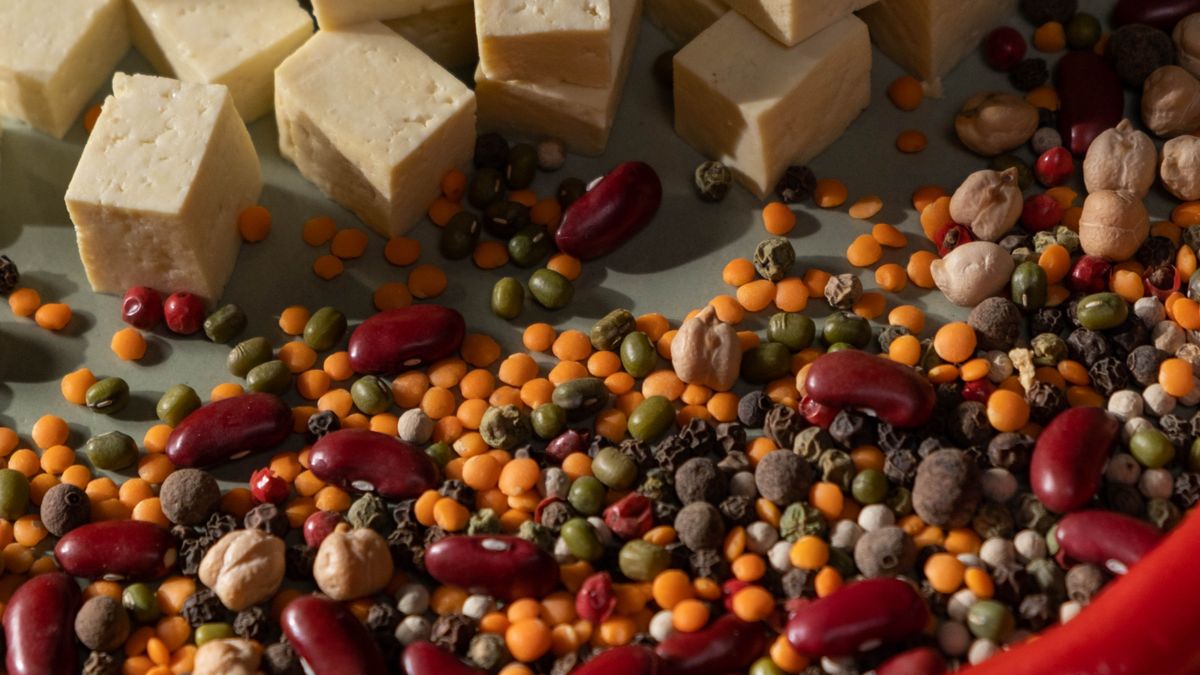
A block of firm tofu gives about 15 to 20 grams, a cup of cooked lentils around 18, and a bowl of Greek yogurt 15 to 20. Combining two of these at breakfast usually closes the gap on its own.
None of this requires a supplement. Powders are a convenience for people with poor appetite or difficulty chewing, not a nutritional requirement for the general population.
Who should not simply raise their protein
Chronic kidney disease is the clearest exception. People with reduced kidney function are often advised to restrict protein, and the targets above do not apply to them without a clinician deciding otherwise.
The evidence is also mixed on source. One analysis found higher protein intake, particularly from animal foods, protective against sarcopenia but associated with higher obesity risk, so the rest of the plate still matters.[8]
What the evidence cannot yet tell us
Much of the intake data is observational, which makes reverse causation hard to exclude. Older adults who are already frail eat less of everything, protein included.[3]
The randomised evidence is smaller and mostly short — the twelve-week trial described above is typical — so it can show changes in muscle composition but not whether those changes prevent falls or fractures years later.[4]
There is also no settled answer on whether protein timing adds anything for people who already meet the daily target through a well-distributed diet. The distribution advice is strongest for those falling short.
| Aspect | Finding |
|---|---|
| Current RDA | 0.8 g per kilogram of body weight per day, set to prevent deficiency rather than preserve muscle |
| Expert recommendation | 1.0 to 1.2 g/kg/day for healthy older adults (PROT-AGE and ESPEN expert groups) |
| If ill or undernourished | 1.2 to 2.0 g/kg/day |
| Per-meal threshold | About 25 to 30 g of protein, or roughly 2.8 g of leucine, for adults over 60 |
| Diminishing returns | Synthesis rises from 15 to 30 g per meal, with no detectable further gain between 30 and 45 g |
| Function findings | 1.2 g/kg/day or more linked to better lower-limb function; 1.0 g/kg/day or more to better walking speed, versus under 0.8 |
| Trial evidence | 12 weeks, 126 women aged 60 to 75 with sarcopenia: 1.2 g/kg/day improved muscle mass composition over 0.8 g/kg/day |
| Compliance gap | Fewer than 15 per cent of older UK adults reached 1.2 g/kg/day |
| Main exception | Chronic kidney disease, where protein is often restricted on medical advice |
References
- Bauer J, Biolo G, Cederholm T, et al. Evidence-based recommendations for optimal dietary protein intake in older people: a position paper from the PROT-AGE Study Group. Journal of the American Medical Directors Association
- Deutz NEP, Bauer JM, Barazzoni R, et al. Protein intake and exercise for optimal muscle function with aging: recommendations from the ESPEN Expert Group. Clinical Nutrition
- Coelho-Junior HJ, Rodrigues B, Uchida M, Marzetti E. Relative Protein Intake and Physical Function in Older Adults: A Systematic Review and Meta-Analysis of Observational Studies. Nutrients
- Role of protein intake in maintaining muscle mass composition among elderly females suffering from sarcopenia. Twelve-week randomised study of 126 women aged 60 to 75 (PubMed Central, 2025)
- Nutritional Interventions: Dietary Protein Needs and Influences on Skeletal Muscle of Older Adults. The Journals of Gerontology: Series A
- Inadequacy of Protein Intake in Older UK Adults (PubMed Central)
- A higher protein intake at breakfast and lunch is associated with a higher total daily protein intake in older adults: a post-hoc cross-sectional analysis of four randomised controlled trials
- Association between dietary intake of protein and amino acids and sarcopenia: a cross-sectional study (PubMed Central)