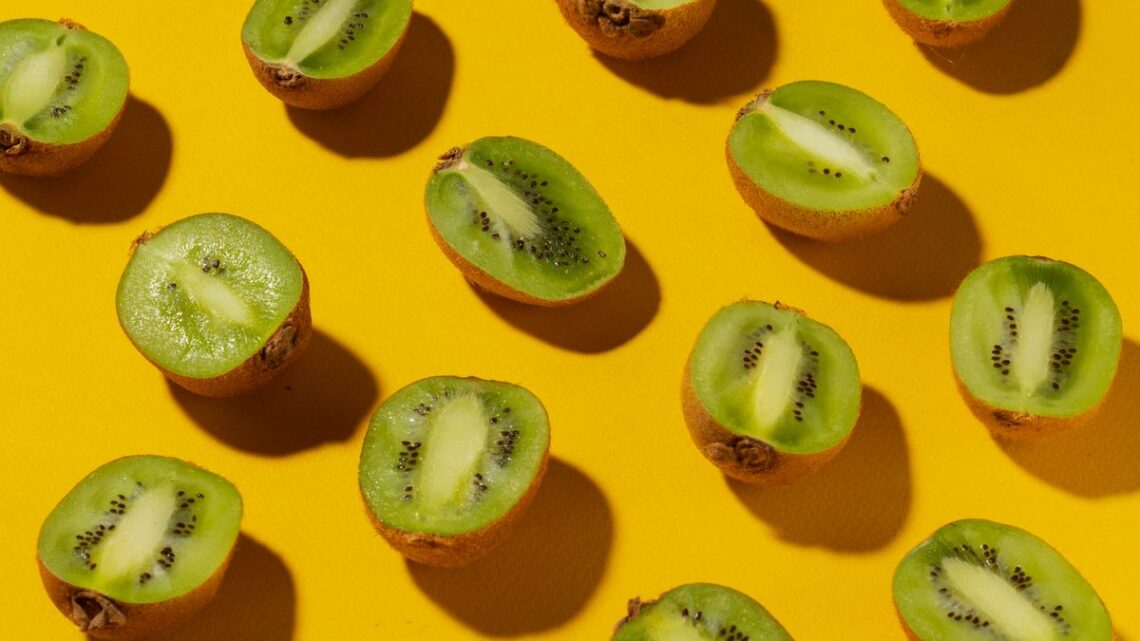
Two green kiwifruit a day sounds like a folk remedy rather than a treatment. It is, however, one of the few dietary interventions for chronic constipation that has been put head to head against a fibre supplement in randomized trials — and it held its own.
Chronic idiopathic constipation affects roughly 8 to 12 percent of adults, which makes it one of the most common reasons people quietly self-treat for years without ever asking a clinician.[1] That makes the quality of the evidence behind everyday remedies worth knowing.
What the 2023 guideline settled, and what it did not
The joint American Gastroenterological Association and American College of Gastroenterology guideline on chronic idiopathic constipation suggests fibre supplementation over no fibre.
The panel marked that a conditional recommendation resting on low-certainty evidence, which is guideline language for a lean rather than an instruction.[1]
The more useful detail is buried in the wording. Among the fibre supplements the panel reviewed — bran, inulin and psyllium — only psyllium appeared effective, with very limited and uncertain data on the other two.[1]
“Eat more fibre” is therefore too vague to be advice; the type matters.
The same guideline was the first to recommend magnesium oxide and senna as evidence-based options, which tells you how thin the ground was before it. It reviewed osmotic laxatives, stimulant laxatives, secretagogues and a serotonin type 4 agonist alongside fibre.[1]
The head-to-head trial: kiwifruit, prunes or psyllium
A comparative effectiveness trial in United States patients with chronic constipation randomized people to green kiwifruit, prunes or psyllium for four weeks.
All three significantly increased weekly complete spontaneous bowel movements, and all three significantly reduced straining.[2]
Where they separated was on the symptoms people actually complain about. Stool consistency improved significantly with kiwifruit and with prunes, but not with psyllium. Bloating improved significantly only in the kiwifruit group.[2]
Tolerability ran the same way. Adverse events were most common with psyllium and least common with kiwifruit.[2] That is the practical argument for trying fruit first: similar benefit, fewer people quitting because of gas and cramping.
How much, and does the evidence hold up across studies
A separate randomized clinical trial tested two gold kiwifruit daily as a treatment for constipation in adults.
A meta-analysis of seven randomized trials in 399 participants then concluded that fresh green kiwifruit, or its extract, improved constipation and abdominal discomfort with efficacy broadly similar to psyllium.[4][3]
Two a day is the dose used across most of this work, taken daily rather than as a rescue. A 2025 double-blind, placebo-controlled eight-week trial extended the question to a proprietary kiwifruit extract in constipation-predominant irritable bowel syndrome.[5]
Sample sizes are the obvious weakness. Three hundred and ninety-nine participants spread across seven trials is a small evidence base, and a whole fruit cannot be blinded — you always know whether you are eating kiwifruit. Both push the true effect toward the optimistic side.
Why kiwifruit works differently from a fibre powder
Imaging studies point to a mechanism that is not simply “more fibre”. Kiwifruit increases the water content of the small intestine and increases total colonic volume, without changing how fast material moves through the colon.[6]
That is a different lever from a bulking fibre, which mainly adds mass. Softer, wetter stool with more volume explains why the consistency and straining scores moved while transit time did not, and it fits the bloating result too: bulk without extra fermentation gas.
Prunes work through yet another route, combining fibre with sorbitol, a sugar alcohol that draws water into the bowel. Three foods, three mechanisms, similar endpoints — which is genuinely useful, because it means a person who cannot tolerate one has real alternatives.
What this is not, and when to stop self-treating
None of this applies to constipation with warning signs. Blood in the stool, unexplained weight loss, a persistent change in bowel habit after age 45, anaemia, or a family history of colorectal cancer all mean the question is no longer which food to try.
It also does not apply to constipation caused by medication, which is common with opioids, some antidepressants, iron and certain blood pressure drugs. Adding kiwifruit to an opioid regimen is not a fair test of kiwifruit.
For ordinary chronic constipation, though, the reasonable order is: two kiwifruit or a serving of prunes daily for four weeks, psyllium if fruit does not suit you, and a clinician if four weeks of consistent effort changes nothing.
| Aspect | Finding |
|---|---|
| Prevalence | Chronic idiopathic constipation affects roughly 8 to 12 percent of adults |
| Guideline stance on fibre | Suggested over no fibre, but conditional and on low-certainty evidence |
| Which fibre | Of bran, inulin and psyllium, only psyllium appeared effective |
| Bowel movement frequency | Kiwifruit, prunes and psyllium all significantly increased weekly complete spontaneous bowel movements |
| Stool consistency | Improved significantly with kiwifruit and prunes, not with psyllium |
| Bloating | Improved significantly only in the kiwifruit group |
| Side effects | Most common with psyllium, least common with kiwifruit |
| Usual dose | Two kiwifruit daily, taken consistently rather than as a rescue |
| Mechanism | Raises small intestinal water content and colonic volume without changing colonic transit time |
| Evidence base | Seven randomized trials, 399 participants; small samples and no blinding for whole fruit |
References
- American Gastroenterological Association-American College of Gastroenterology Clinical Practice Guideline: Pharmacological Management of Chronic Idiopathic Constipation, American Journal of Gastroenterology, June 2023
- Exploratory Comparative Effectiveness Trial of Green Kiwifruit, Psyllium, or Prunes in US Patients With Chronic Constipation, American Journal of Gastroenterology
- In persons with constipation or IBS-C, kiwifruit vs. psyllium increased spontaneous bowel movements, ACP Journal Club, Annals of Internal Medicine
- Two Gold Kiwifruit Daily for Effective Treatment of Constipation in Adults – A Randomized Clinical Trial, 2022
- Holtmann G, et al. Randomized, Placebo-Controlled, Double-Blind 8-Week Trial on the Efficacy of a Proprietary Kiwifruit Extract on Constipation-Predominant Irritable Bowel Syndrome, JGH Open, 2025
- Kiwifruit – A Specific Food To Improve Stool Frequency in Patients with Mild Constipation, Evidence-Based GI, American College of Gastroenterology, 2023