English translation of the original Korean article: 테슬라가 텍사스에 태양광 공장을 지으려는 이유 — 101억 달러 베팅의 이면
On August 6, an unfamiliar filing appeared on the website of the Texas Comptroller’s office. The applicant was Tesla, and the project’s code name was “Project Crystal Sun.” On its face it was a procedural application for a tax abatement, but a closer look reveals it to be the largest manufacturing investment Tesla has ever proposed on U.S. soil.
The filing puts the price tag at $10.116 billion, more than 14 trillion won. The site sits on roughly 3,050 acres near Richmond in Fort Bend County, about 40 minutes southwest of Houston. The application was signed by one of Tesla’s tax attorneys on July 22 and was prepared by the consulting firm Kroll.
The request falls under Texas’s JETI (Jobs, Energy, Technology and Innovation Act) program, seeking a ten-year property tax abatement. Tesla states in the filing that without the abatement, the site would be less economical than competing locations in other states — a common negotiating card large manufacturers play during site-selection talks.
The most striking part of the filing is the equipment list. It spans ingot (cylindrical silicon block) growth, wafer slicing, coating, metallization and printing lines, cell testing, and cleanrooms. In other words, it describes a fully vertically integrated plant: polysilicon raw material goes in one end, and finished solar cells and modules come out the other.
That kind of structure is exceedingly rare in the United States. Most facilities that have been called “solar manufacturing” in the U.S. so far have really been back-end operations, assembling cells imported from Asia into modules. According to pv magazine, as of early 2026 the U.S. had roughly 60 GW of annual module-assembly capacity, but less than 15 GW of actual cell-production capacity. Building everything from ingots to modules under one roof has, until now, been an area China has effectively monopolized.
The Crystal Sun investment is slated to be spent over three years, from 2026 through 2028, with commercial production targeted for the first quarter of 2029. The capital is split between $1.5 billion for real estate and $8.6 billion for equipment. The economic-impact analysis attached to the filing estimates that, once fully operational, the plant would employ 9,712 full-time workers and contribute roughly $107 billion to Texas’s state GDP and $6.4 billion in tax revenue over the following 38 years.
It’s worth remembering these figures are estimates put forward by Tesla and its consultants, and the project is still in the pre-construction stage. Only some of the five parcels listed in the site application are expected to actually be used, and Fort Bend County still has to go through the process of designating a reinvestment zone.
The project echoes remarks Elon Musk made at Davos earlier this year. He said the SpaceX and Tesla teams are aiming to manufacture 100 GW a year of solar generation equipment in the U.S., a goal he said would take about three years to reach. Crystal Sun is seen as the manufacturing backbone that would turn that 100 GW target into reality.
In fact, reports surfaced in March that Tesla was considering purchasing $2.9 billion worth of Chinese solar equipment to support that same goal — a contradiction that captures the state of U.S. solar manufacturing: tariffs keep out Chinese-made cells, while the equipment used to make those cells still has to come from China.
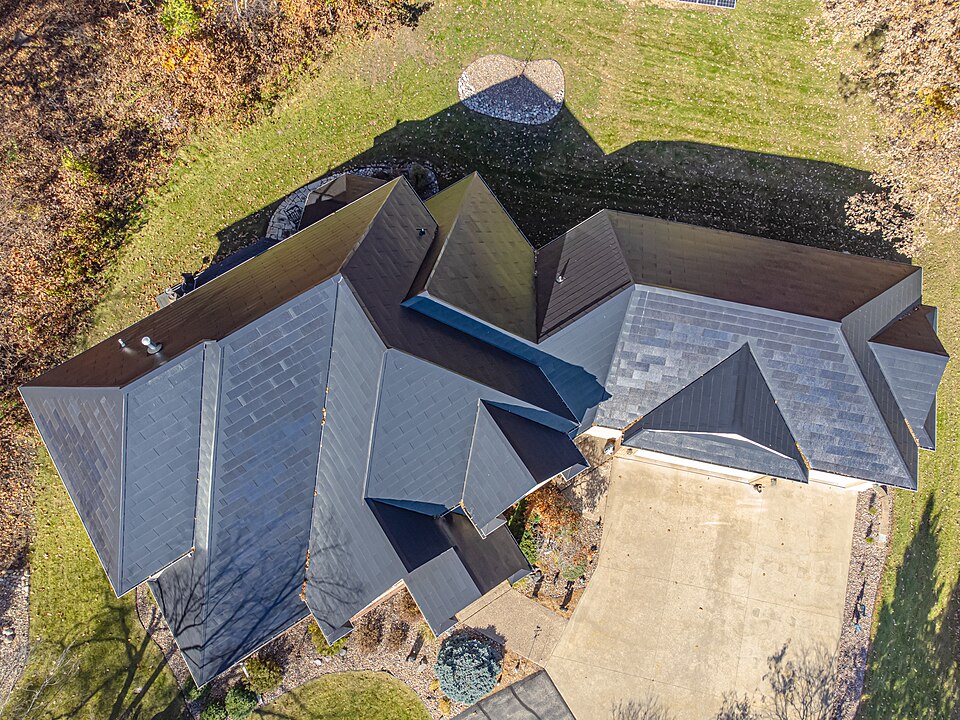
But Tesla’s promise of “made-in-America solar” already has one failure behind it. In 2016, Tesla acquired SolarCity for $2.6 billion and renamed its Buffalo plant “Gigafactory 2,” with a target of 10 GW a year in solar panel production.
Tesla tried to produce cells there with Panasonic, but Panasonic pulled out in 2020. The Solar Roof product has missed its production targets for years since — something the trade outlet Electrek has called one of the industry’s “most embarrassing failures.”
Electrek notes that companies often file this kind of paperwork to pit jurisdictions against each other, and that many such filings never lead to an actual groundbreaking — meaning the $10.1 billion and 9,712 jobs should be read as a negotiating chip rather than a firm commitment. At the same time, Electrek adds, if the plant is actually built, it would mean a vertically integrated factory making everything from silicon to modules on U.S. soil — something it calls genuinely significant.
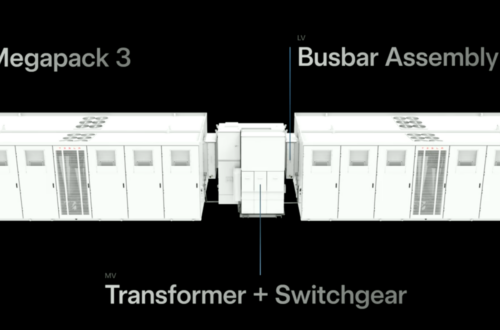
With the car business stagnant, the energy division has become the bright spot in Tesla’s results. In the second quarter of 2026, Tesla’s energy storage deployment growth outpaced its vehicle delivery growth, and its Megapack 3 factory in Brookshire, Texas began production earlier this month.
If Crystal Sun is built as planned, Tesla would gain control of the upstream supply chain for that energy business as well. But many steps remain before construction can begin, including local designation of a tax-incentive zone and approval of the incentives themselves.
References
- Fred Lambert, “Tesla files for $10.1B ‘Project Crystal Sun’ solar factory in Texas,” Electrek, Aug. 11, 2026
- Ryan Kennedy, “Tesla files tax incentive application for $10.1 billion Texas solar cell plant,” pv magazine, Aug. 12, 2026
- “Tesla in talks to buy $2.9B in Chinese solar equipment for 100 GW US push,” Electrek, Mar. 20, 2026
- Wikideas1, “Tesla Solar Roof,” Wikimedia Commons, CC0, Nov. 6, 2023